PC 310 Bits and Bobs

On my birthday last month I was treated to dinner at The Ivy in Brighton (see PC 202 Others’ Manners October 2020) ; it’s become a little bit of a habit and I admit I’m a lucky chap. (Note 1) After our main courses and whilst perusing the dessert section of the menu, I decided to go downstairs to the loo. As I entered I saw a chap standing in front of the left hand of two urinals, so walked over to the free one. During these few steps my brain started processing what this chap looked like …… but within the confines of a gentlemen’s loo too much obvious staring could be construed in different ways. There was no sound and no movement from him and eventually I had enough confidence to look at him directly. He was a mannequin dressed in an absurd costume.
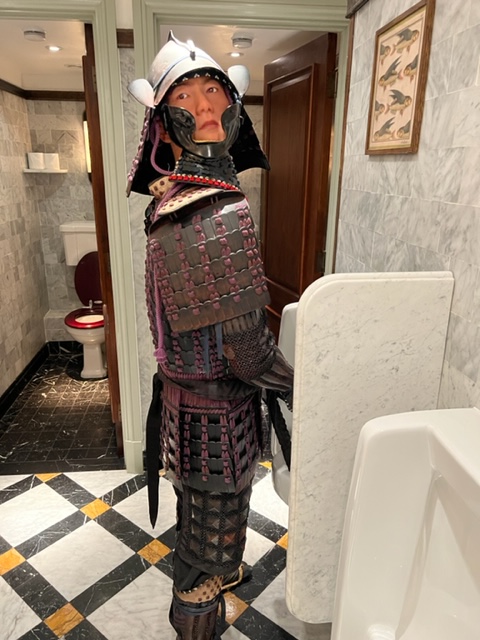
Phew! Thank God I got that right as in Brighton anything goes, is acceptable and maybe it was his particular penchant. Having completed my own business I thought I should take a photograph of him, as he was just such a weird thing to find in such an intimate space. I got out my iPhone, stood back a little and …… and at that point another chap opened the door. To find someone taking a photograph of another ‘pointing Percy at the porcelain’ as the euphemism goes, well, I could imagine what instantly went through his head. He recoiled ever so slightly but recovered when he heard me loudly say ‘He’s not real!’, although he probably thought … “to be on the safe side I’ll go into one of the stalls: funny people in here!”

It seems every time you want to order something the company concerned need all your personal details, including your shoe size and how often you change your electric toothbrush head. This mining of our data doesn’t worry me, but sometimes I have a real problem filling out the questionnaire. For example, a few weeks ago I booked a dental appointment, at a practice I have used before, so thought they knew all about me. Not so! Before my visit I have to fill out a questionnaire. I was doing OK until I came to this:

“If you are female, are you pregnant or could you possibly be pregnant?” and the options were ‘Yes’ or ‘No’. I could not leave the box blank!
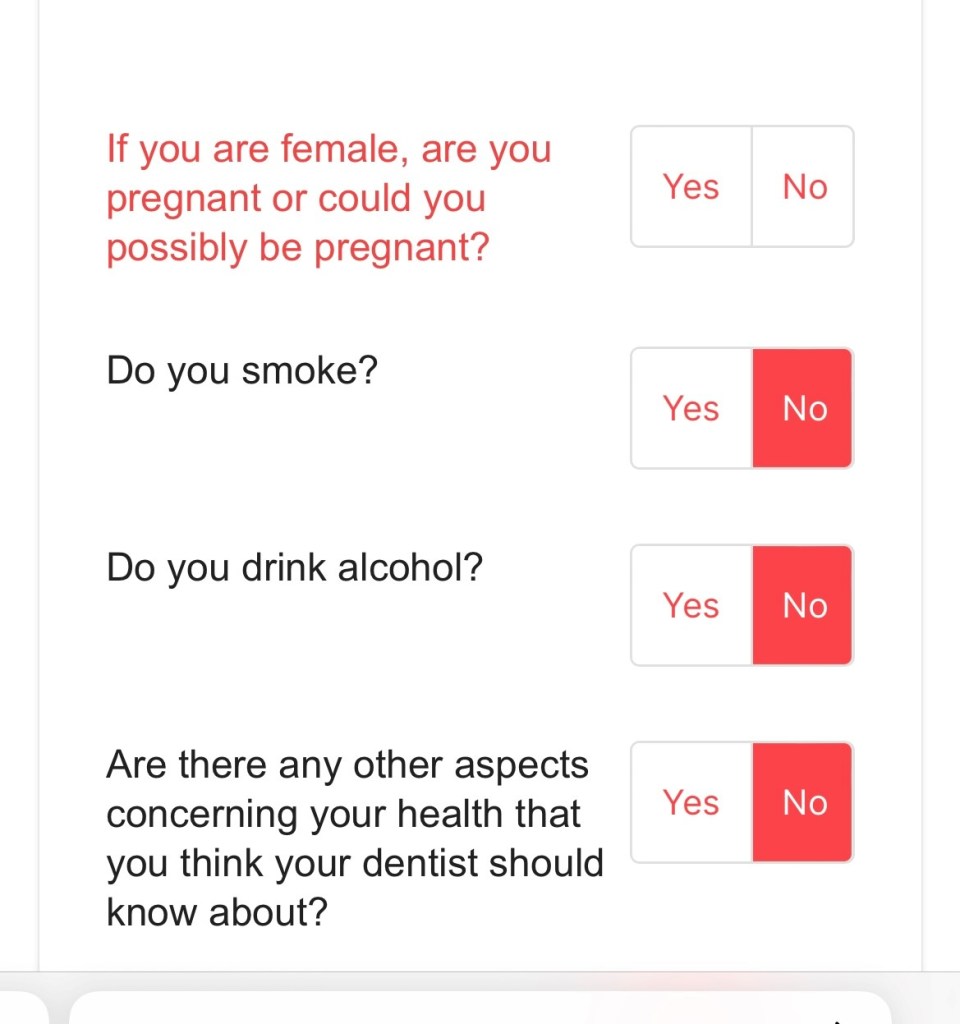
So a ‘No’ answer could be I was a male, or that I was female but not pregnant.

Then further on, these two questions:

“How Did you hear About us?” Again a ‘Yes’ or a ‘No’ option, as it was with “What is your occupation?”
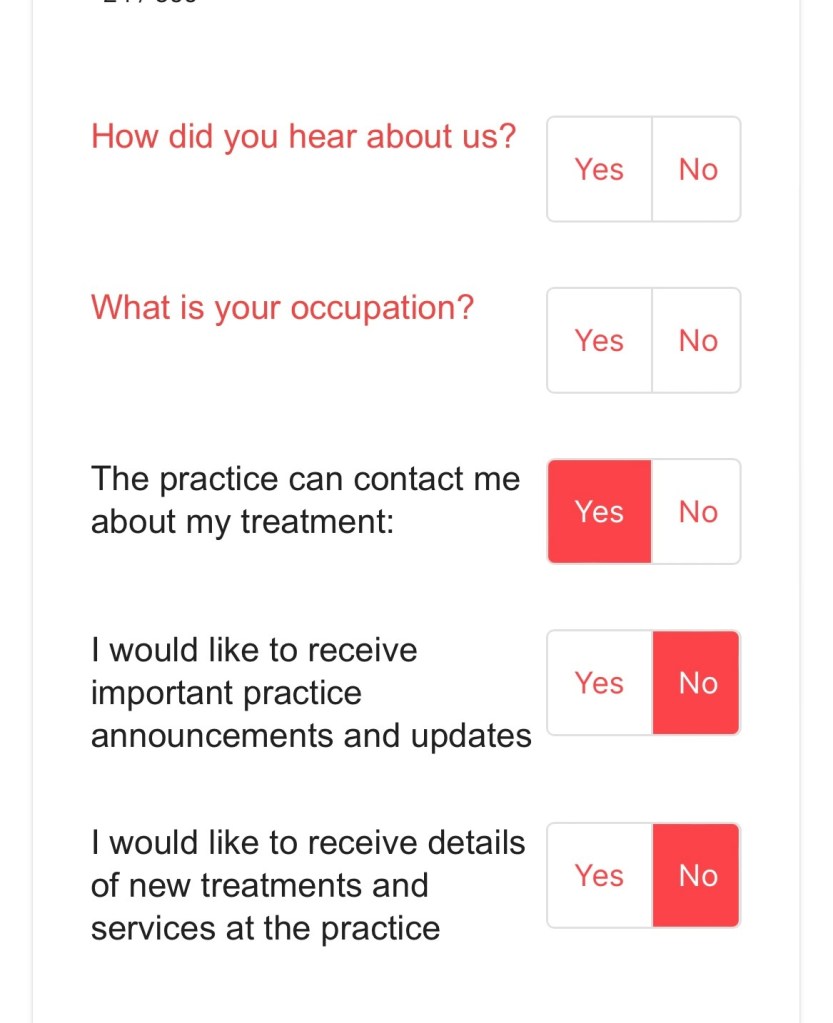
I was at the practice this week and asked the receptionist how I was meant to fill it out. “It’s a generic form, we have no say …..”!   

Three weeks ago the South Dorset village of Langton Matravers ……

…… joined a line up the length of Great Britain to Fraserburgh in the far northeast of Aberdeenshire as the three ‘norths’, true, magnetic and grid aligned.
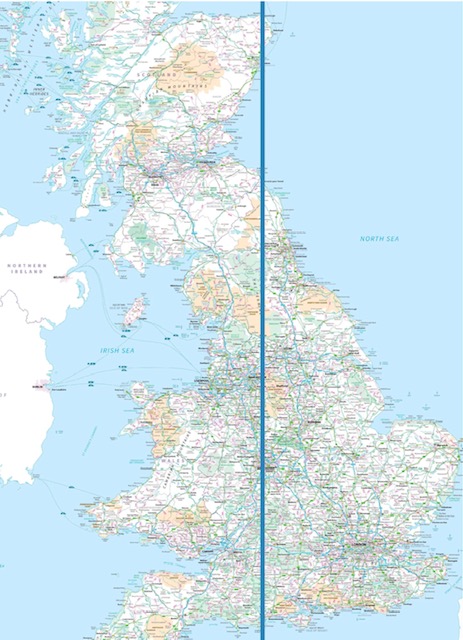
True north, the direction of lines of longitude that all converge at the north and south poles, grid north, the vertical lines on maps, and magnetic north, the direction a compass will point in, will all be on one line. I find this stuff fascinating and vital in my past lives as soldier and sailor, where navigating by a magnetic compass was an important skill to master. You may remember in PC 209 (Off Arromanches) a skipper who I knew well asked whether he should have added or subtracted the magnetic variation, then some 4°, as they had missed the entrance for the French town of Trouville.

In PC 308 From Pillar to Post, I quoted a local guide John Cummings-Lee-Hynes and asked in a note whether anyone knew of a four hyphenated surname. My brother offered the name of his local South Dorset MP, a Richard Drax, as his full surname is Plunkett-Ernle-Erle-Drax. (Note 3)  Interestingly his grandfather Sir Reginald Plunkett-Ernle-Erle-Drax was an Anglo-Irish Admiral whose mother had extended the surname, initially to Ernle Plunkett-Ernle in 1905 and then adding Erle and Drax in 1906, both by Royal Licence. If you think the name Drax rings a bell, it’s because Ian Fleming was a friend of Sir Reginald and named his Moonraker character Sir Hugo Drax as a tribute!

In my innocence I had assumed it was a mixture of a God Father with a stutter and a hard-of-hearing Parish Church clerk at someone’s baptism.

Who names this child?”

I do and his names are Rrrreginald er er Errrnle Enrrle Drrrrax.”

So the clerk fills in the Baptismal Register incorrectly, a little like how Smith has been written Smyth and Smithe. You wouldn’t want to admit to not knowing how to spell someone’s surname so you just wrote it as it sounded!!

One’s age is, for some, a very personal thing and it was considered very rude to ask a woman her age. But the other day I thought, well, if you add the two individual numbers that make my age together you get 13. So there you are: what a disclosure! On that recent birthday my brother had sent me a slab of lovely chocolate Brownies by post from a Dorset company called Chococo.  It was only when the box was empty did I notice the cardboard lid:
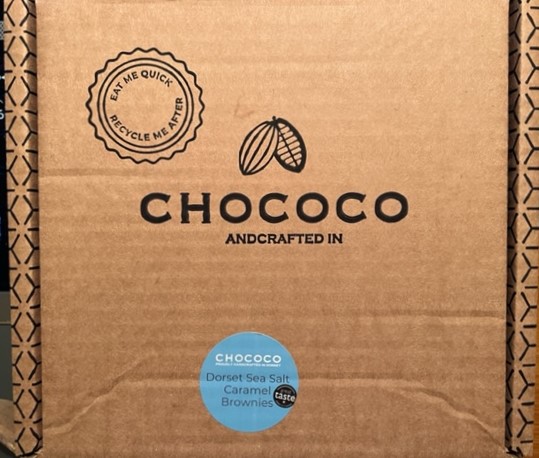
Initially I thought it was amusing, using a little Dorset vernacular, dropping the ‘h’ but that didn’t make sense with ‘in’ – in where? Hey! Ho! No one is perfect.

Richard 25th November 2022

http://www.postcardscribbles.co.uk

Note I This might be the title of my next postcards.

Note 2 Such a delightfully name originating from Langton from ‘long town’ and John Matravers who owned land there in 1281. There is another village, Worth Matravers, so named after a William Matravers who was Constable of Corfe Castle in the C14th.

Note 3 I feel sure his nickname at school was Peed (?)
PC 309 A Conversation with Sami

I popped into the Hope Café this week as Sami had texted to say he was back from his Indian adventures (see PC 302) and wanted to show me some photographs. Grabbing my usual double espresso I made my way across to Sami’s corner table, where his iPad lay open in front of him. In these quasi post-pandemic times, a big hug seemed the right thing to do!

“Sami, so good to see you again; you must have been away three months or more?”

“Actually I got back in mid-October but I hadn’t been keeping my Covid Vaccinations up to date and caught a very mild dose! Fortunately my blood group is O Positive and statistically we have fewer symptoms than other groups; anyway I am now fully vaccinated!”

“Glad to hear it! How was your trip? Did you get to look at some of the Indian Mutiny sites?”

“Yes! I found a great travel agent, Float & Fly Tours and its MD JP Sangar who organised everything for me.”

“Excellent! You remember me telling you before you went that my great-great-grandfather had been in Patna during The Mutiny, commanding the Behar Station Guards. One of his sons, George and aged 7 at the time, remembers sitting on a roof and watching the rioters roaming the streets looking for trouble.

But Britain didn’t of course govern the entire Indian subcontinent, did it?”

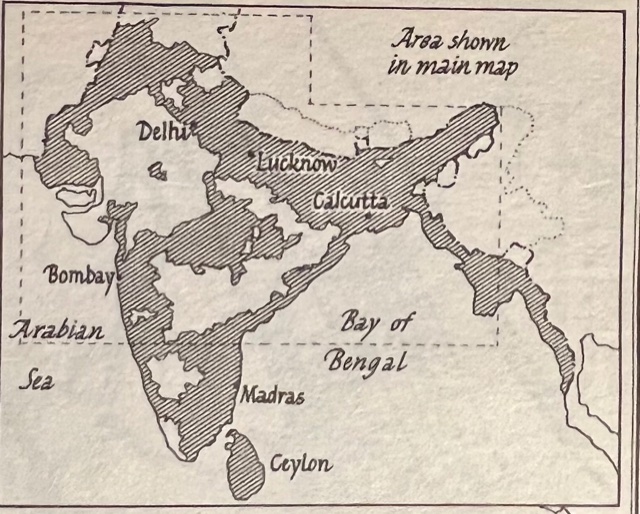
“No, I found this map which shows parts of the country were run by Maharajahs. And the rest (shaded) was essentially subcontracted out to the East India Company, who was a quasi-governmental organisation whose army was recruited mainly from Bengal.

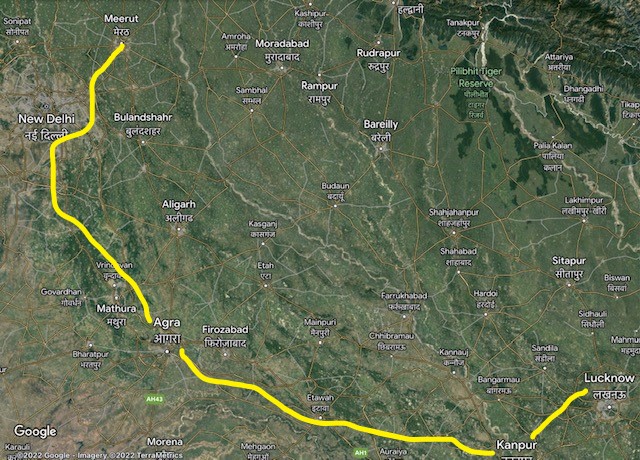
I flew to Delhi and learned that the tour would take in Meerut, Delhi itself, then down to Agra and on to Cawnpore (now reverted to its Indian name Kanpur) and Lucknow.  Here’s the geography.”

“You probably don’t want to do a blow-by-blow, minute-by-minute account but what are the immediate memories you’ve brought back?”

“Well, most people know the popularist reason for The Mutiny concerned the new Enfield rifle cartridge. The rifleman needed to bite off the end of the paper wrapping, said to be greased with pork and beef tallow; not good if you were either Hindu or Muslim! But there were other grievances throughout the army, which was a volunteer mercenary force officered by men of a different race and religion!”

“Ah! Yes! The British men who didn’t have the money to buy a commission in the army at home!”

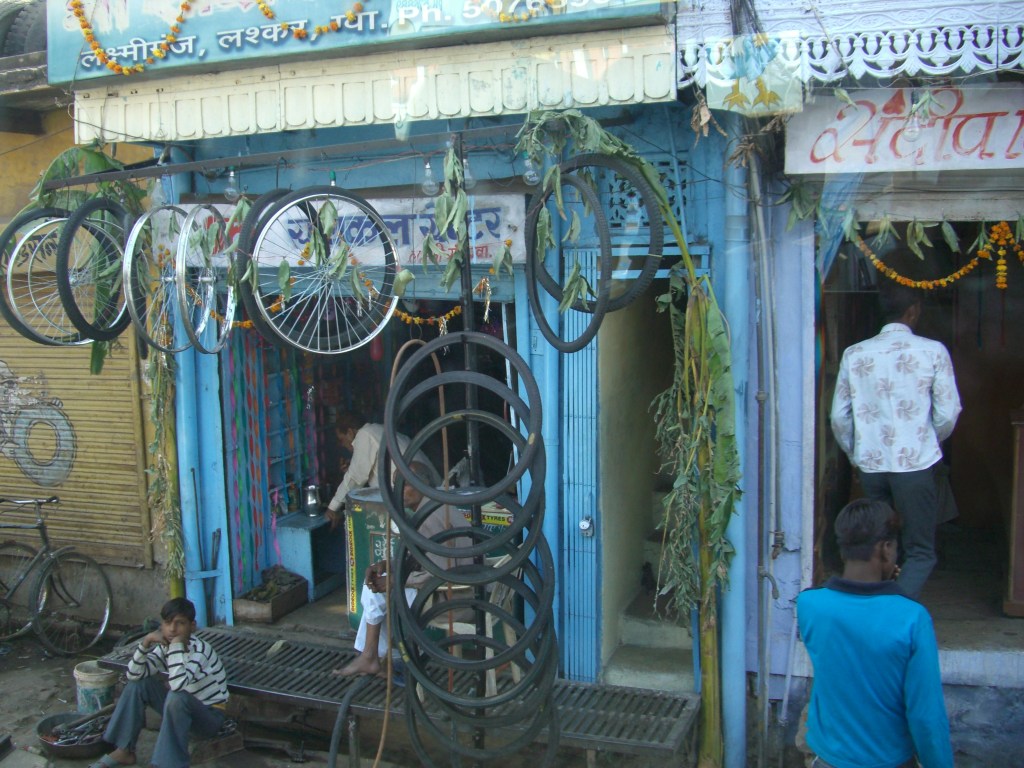
“Exactly! We drove out of Delhi to Meerut where it had all kicked off on 10 May 1857. As you move away from the centre of Delhi, or any other city for that matter, the roadside stalls change in their offering. For example, first new cars, then second hand cars, then tyres and upholstery, then individual wheels, then wheel hubs and finally nuts. Everything is recycled, everything is for sale!”

Susie popped over, asking whether we wanted more coffee and, as it was a Thursday, produced some Brazilian Brigadeiros from next door to sample. With more coffee ordered, Sami continued:

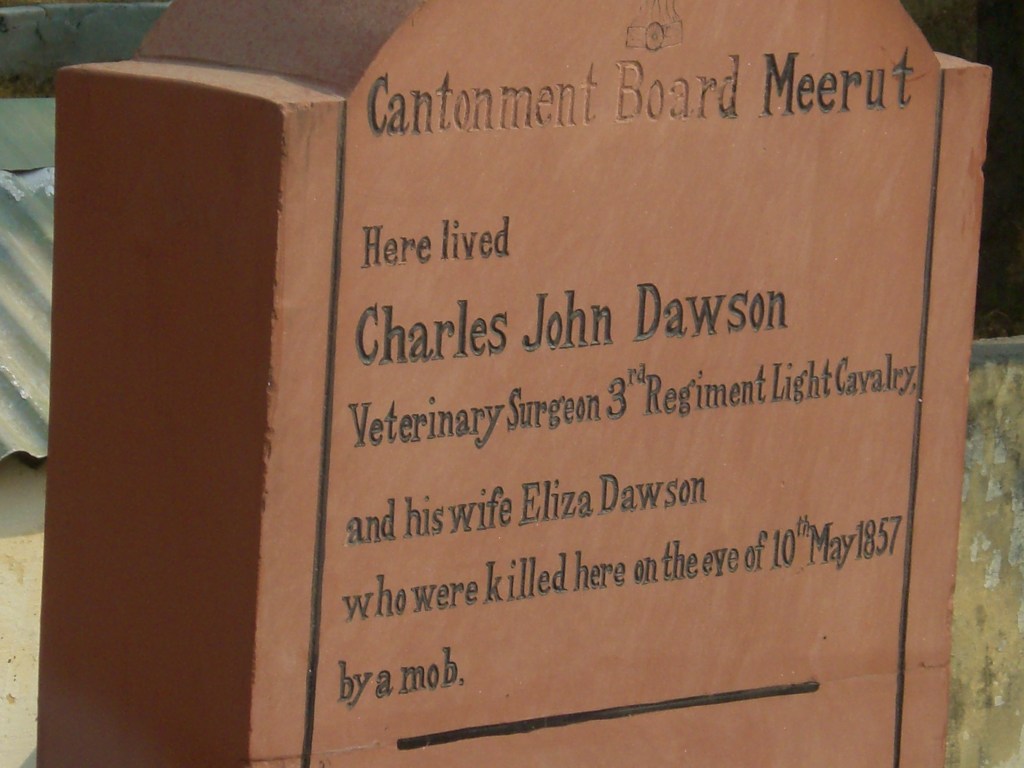
“In Meerut the church has memorials to the officers and their families who died; here’s one to Veterinary Surgeon Charles Dawson and his wife Eliza – ‘killed by the mob’

We looked at where there had been fighting in Delhi but it was what happened in Cawnpore that I remember more; such a tragic story and its ramifications spread far and wide.”

“What happened?”


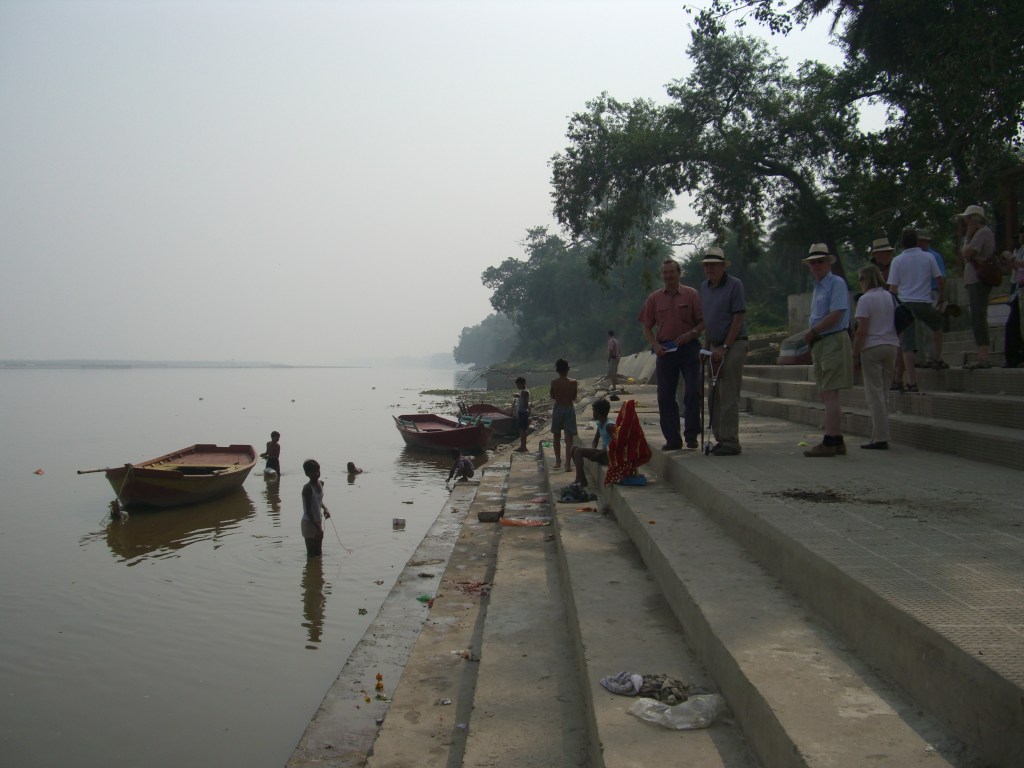
Satichaura Ghat looking downstream

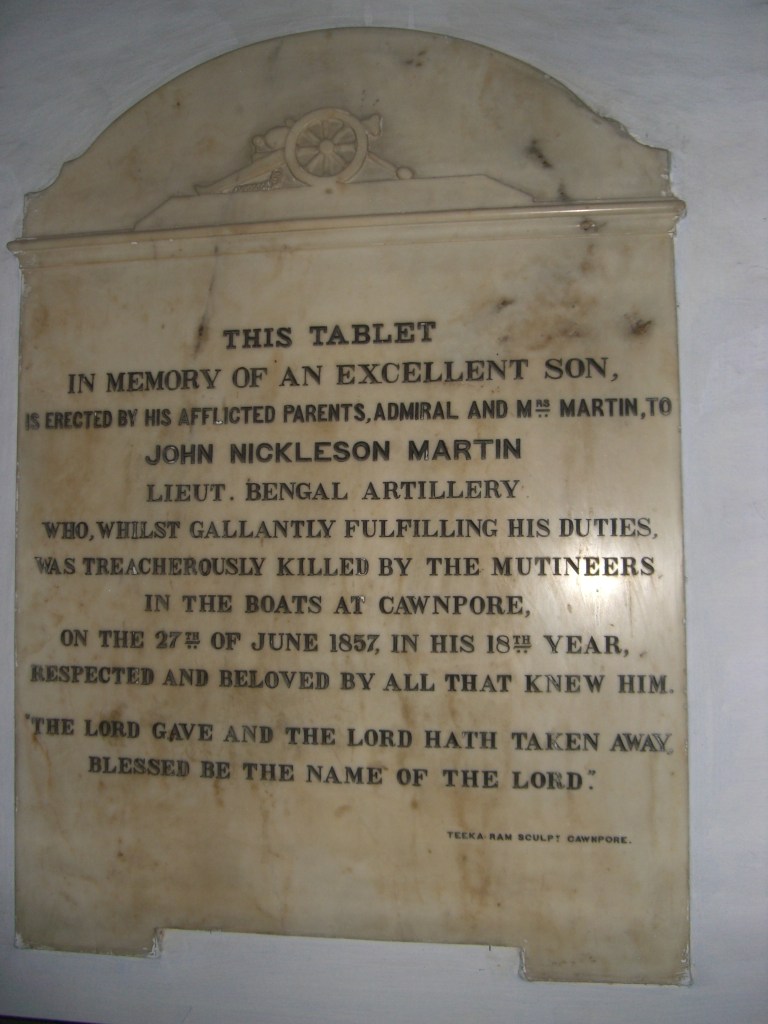
“In short, the British forces in the city of Cawnpore surrendered to the rebel army, with a promise of safe passage down the Ganges. As the laden boats pulled away from Satichaura Ghat, rebels opened fire, and hundreds died.

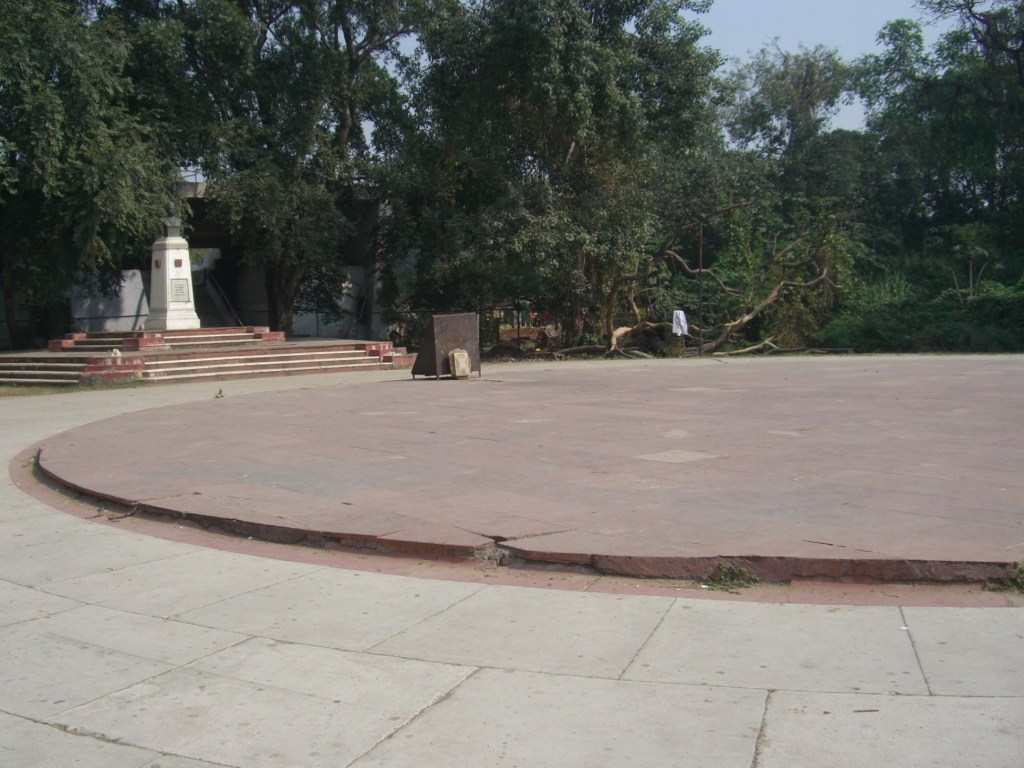
The survivors, some 197 women and children, were taken to a single storey house, the Bibigarh, in Cawnpore, to be used as a bargaining chip. Two weeks later, any negotiations having proved fruitless, five men hacked the group to death with swords and threw the bodies down a nearby well.”

The covered-over well at Cawnpore

“God! How awful!”

“Sadly this slaughter unleashed a wave of retribution on the Indian rebels and thousands were hanged or blown to pieces with the cry ‘Remember Cawnpore’ ringing in their ears.”

“I think we believe women and children should be spared violence but the war in Ukraine has reminded us that savagery knows no limits. Any nicer memories?”

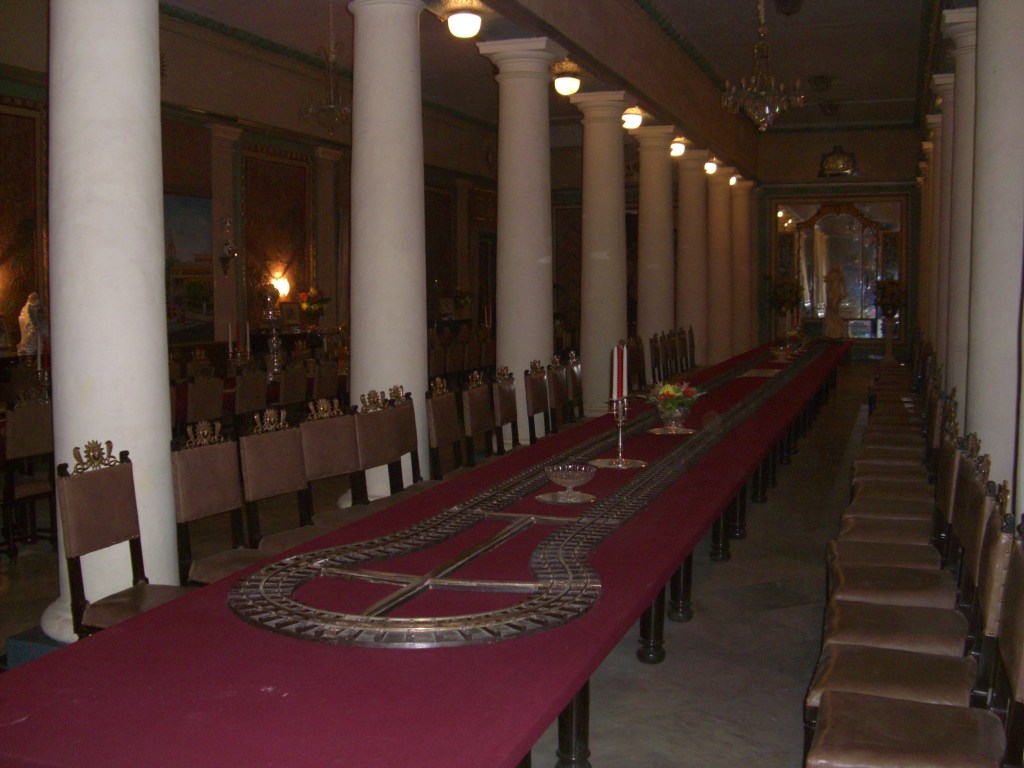
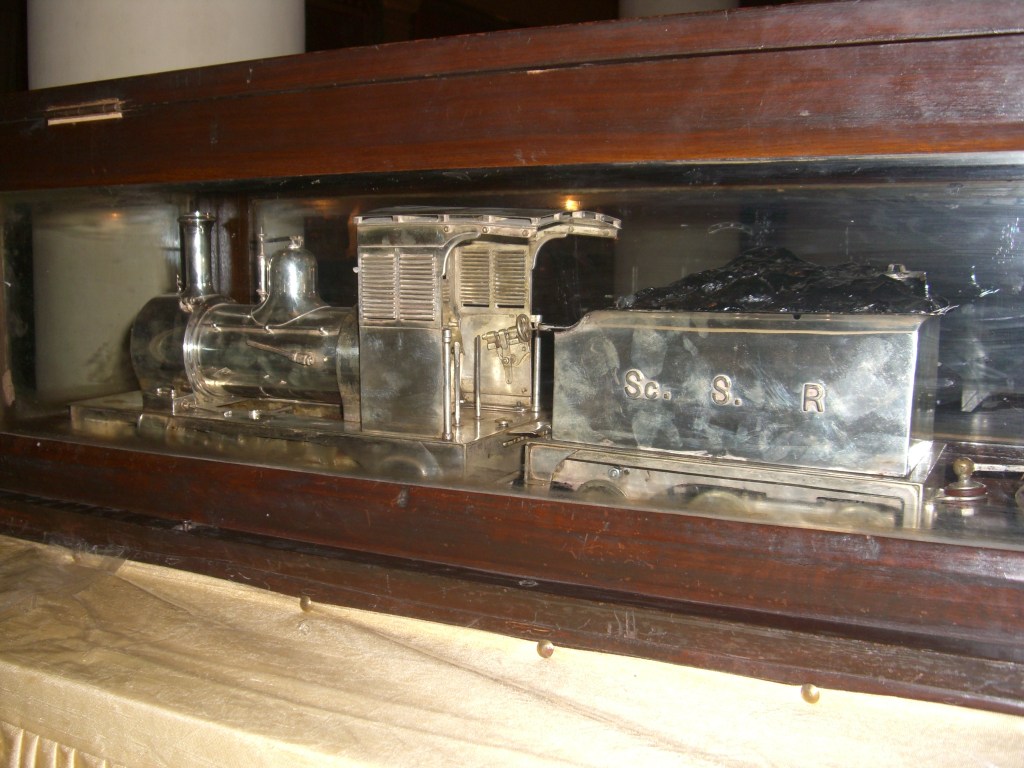
“We visited a few Maharajas’ palaces. In the one in Agra we saw a huge mahogany dining table, so big that the condiments were moved around by a model train set, in solid silver of course!

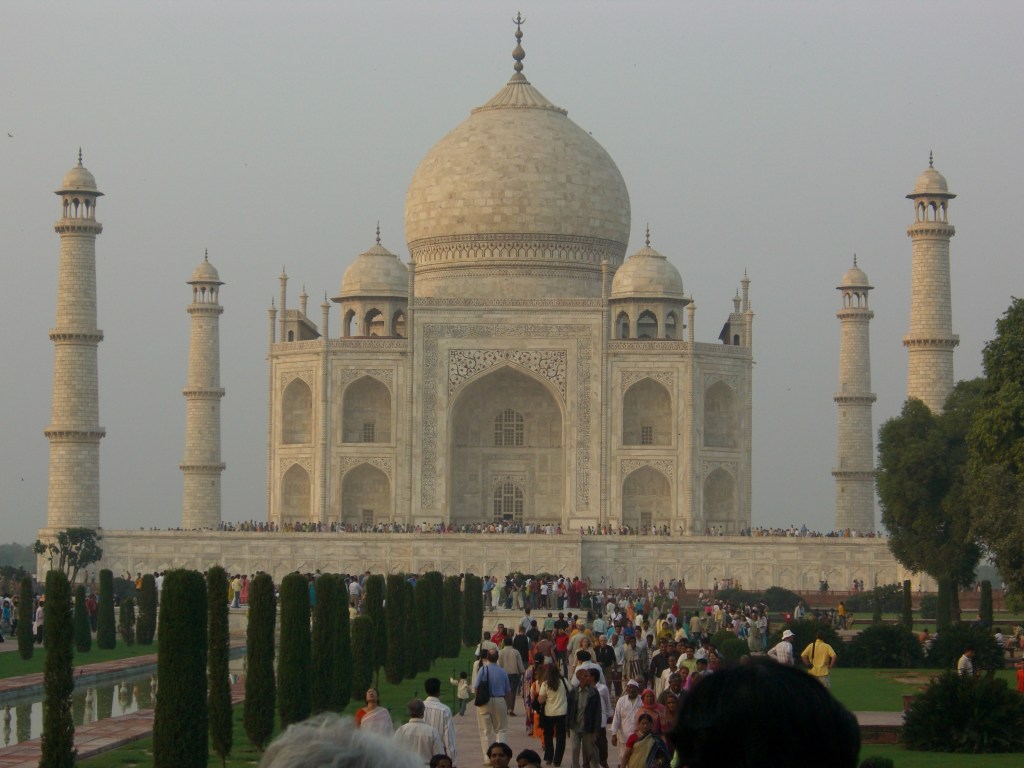
While we were in Agra we joined the queues to see the famous Taj Mahal, the white marble mausoleum housing the Mughal emperor Shah Jahan and his favourite wife Mumtaz Mahal.

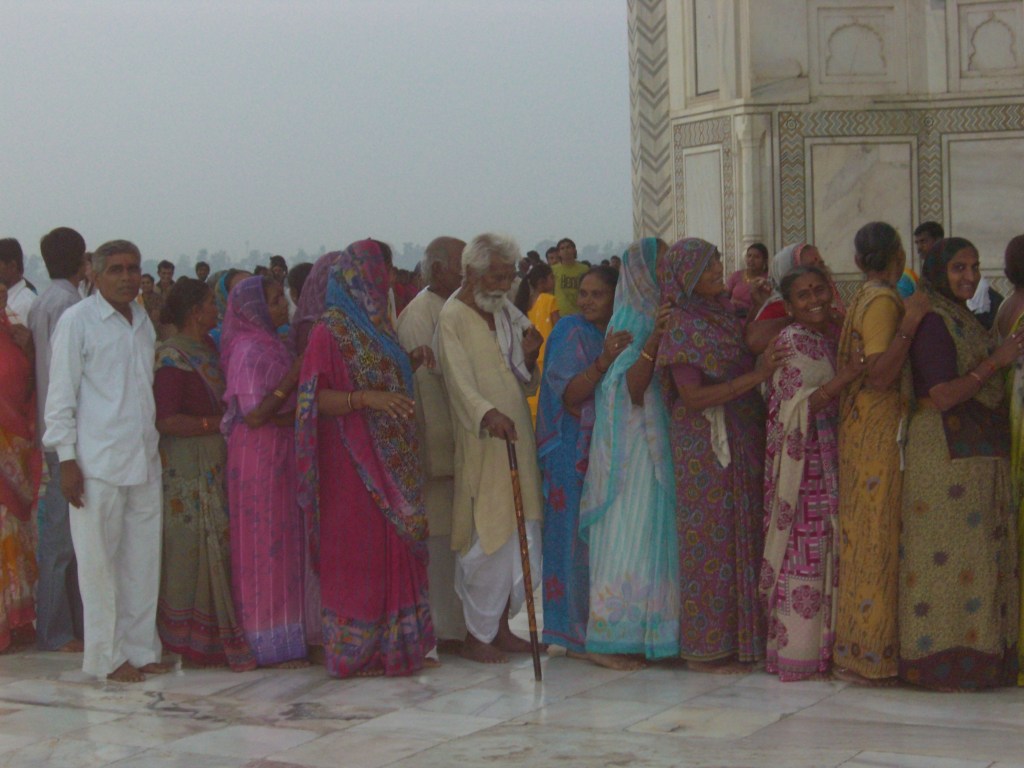
Such a British thing, to queue, but in India there is no idea of personal space; everyone is happy to be up against the person in front – I found this uncomfortable!

It’s been interesting going to India and to meet Indira and other cousins but I don’t feel Indian. My skin colour suggests a pigmentation darker than white, natural as my mother was English, but she never learned to cook curries! My father never cooked, it’s not the way an Indian family split responsibilities, so our house in Southall was never full of the aroma of spices.

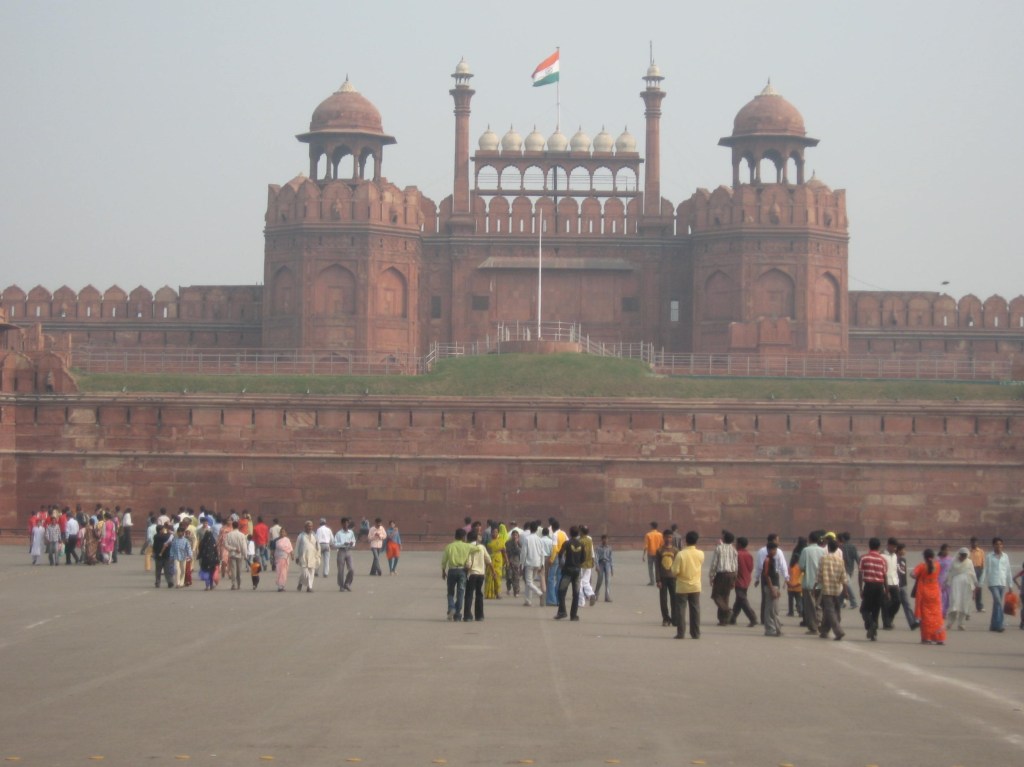
Delhi’s Red Fort

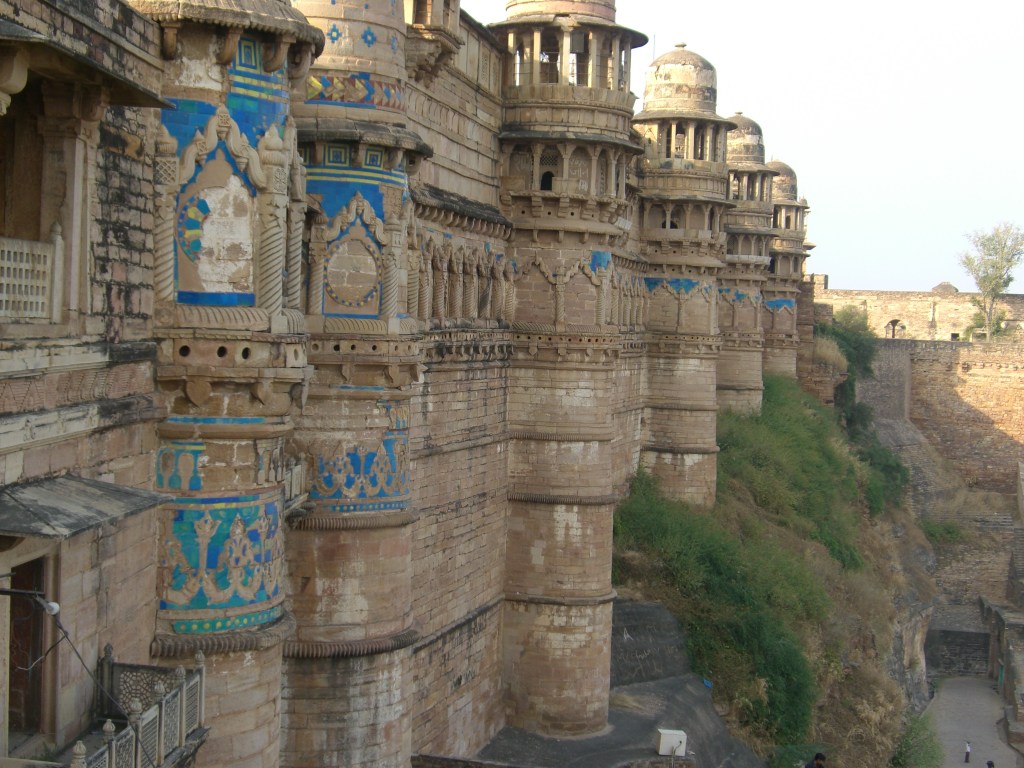
The country is littered with ancient forts and palaces, some like the Red Fort in Delhi well maintained and others just rotting away with no budgets or current interest to maintain or care for them.  

The Indian Mutiny, or the First War of Independence, is now considered to be the start of the agitation for independence, which culminated less than 100 years later in the partition of the country into Hindu India and Muslim Pakistan.”

“Wow, Sami, you’ve had a wonderful time by the sound of it; love the photographs. Now all you need is a good outcome to the Post Office Inquiry and you will finish the year on a high.”

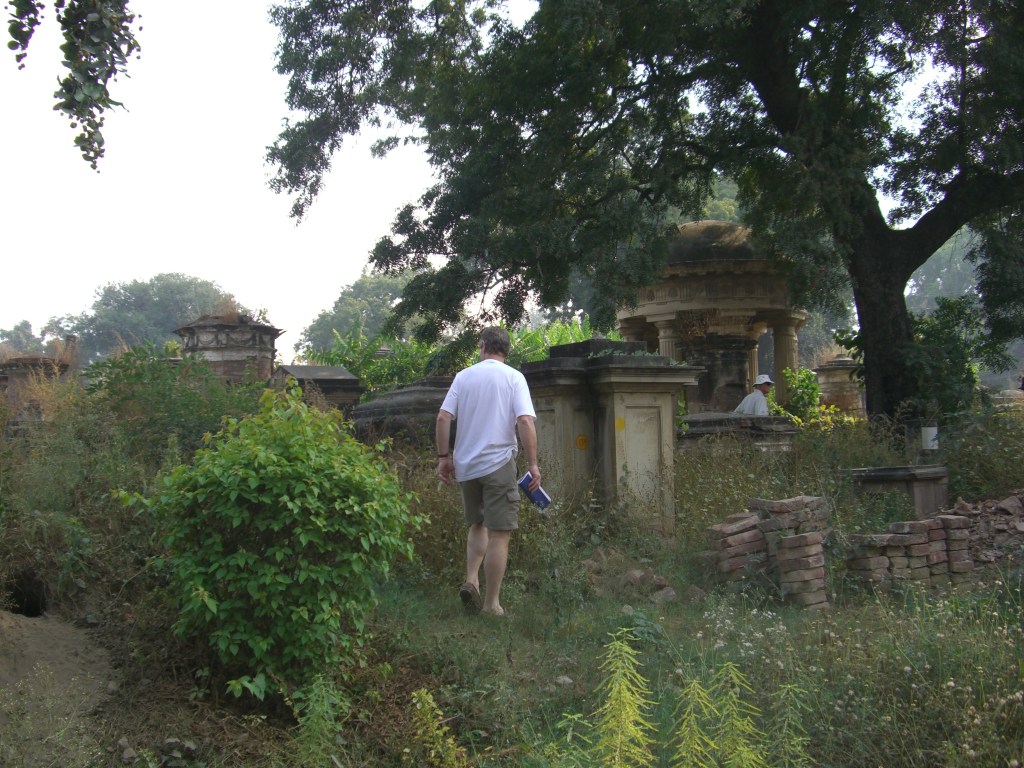
“Absolutely! And by the way, I went looking for the memorial to your great-great-great grandfather Stephen Nation (a Brigadier who died of cholera aged 48 in 1828), who’s buried in the Christian Cemetery in Cawnpore, but it’s all rather crumbled ……. and I couldn’t find it”

“That was really sweet of you.”

Richard 18th November 2022

www.postcardscribbles.co.uk

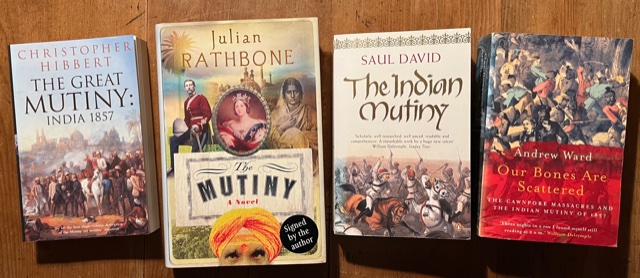
PS If you seriously want to know more about The Indian Mutiny, read some of these books:

PC 308 From Pillar to Post

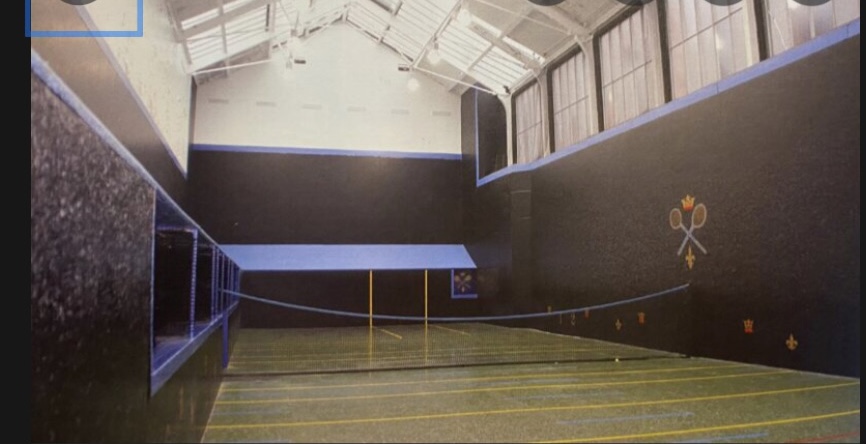
I could image this English saying to mean unconnected items to scribble about, as a pillar is not the same as a post, but the reality is different! It actually originates from the game of ‘real tennis’ (Note 1) and was first used in 1420 when it was ‘from post to pillar’! Its modern meaning describes someone who is being driven, hounded or chased from one place to another, is being harassed. Certainly not harassed about writing this week’s post, but don’t you just love how some sayings get hijacked to mean something completely different from their origin?

There is a tenuous theme to today’s post and it’s sand, as in the mixture of small grains of rock and granular materials, finer than gravel and coarser than silt, generally found at the seaside.

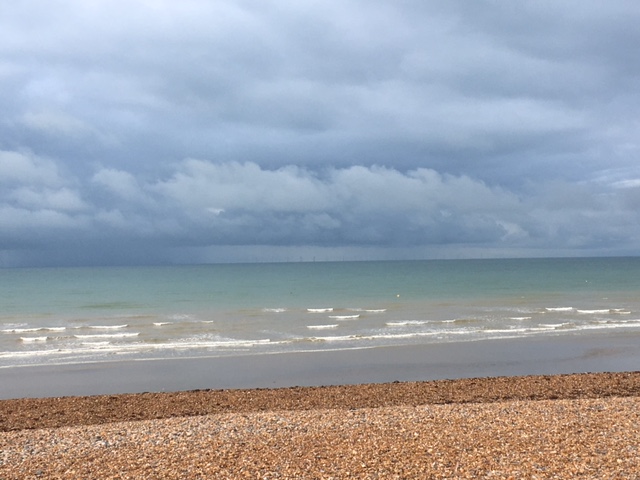
Our beach at low tide

Here on the Sussex coast at Hove the yellow stuff is only visible at low water. Normally the beach consists of small to medium pebbles, which make walking down to the water’s edge a slightly tricky operation and sitting on it without padding uncomfortable, unless you have your own built-in upholstery. The upside is that you don’t get sand inside your swimming costume or in your sandwiches!

When I first sailed offshore I started taking more of an interest in weather forecasting, as it played a hugely important part in any voyage. The ‘Shipping Forecast’ became de rigueur before any trip and I can recite the various sea areas around the UK, in their order, in my sleep: “…… Dogger, German Bight, Humber, Thames, Dover, Wight etc etc”. Paul Simons writes a column in The Times called Weather Eye and he’s good at researching for instance, comparisons with current weather, quoting weather folk lore and its accuracy or informing me that the earthy smell after it’s rained is called petrichor. I hope he won’t mind me quoting verbatim his recent piece about Red Crabs and their march across the sand, as it’s nature at its best and I couldn’t write it better:

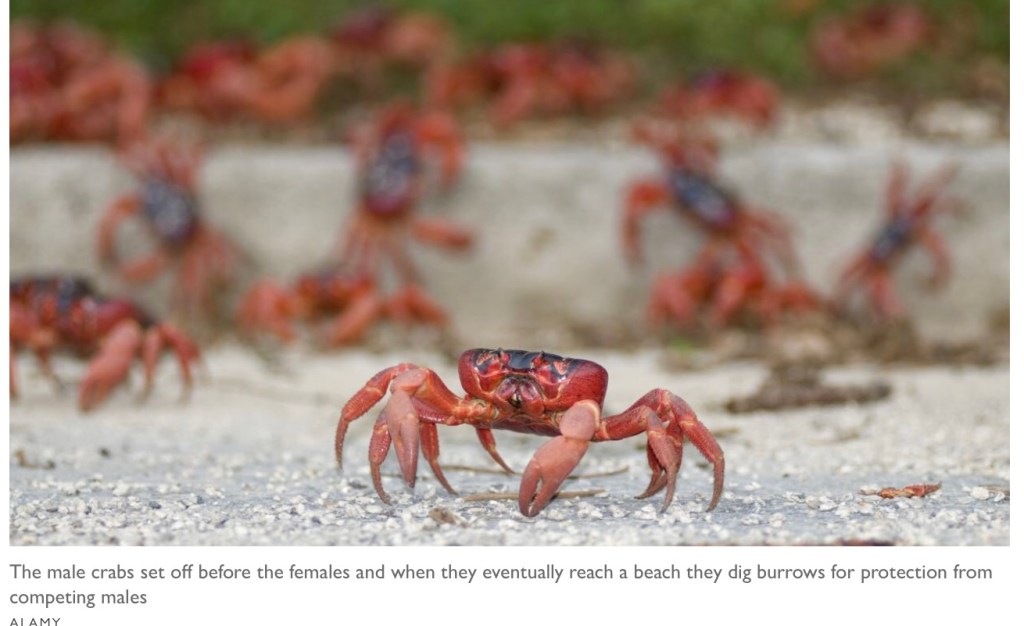
(Photo from Alamy)

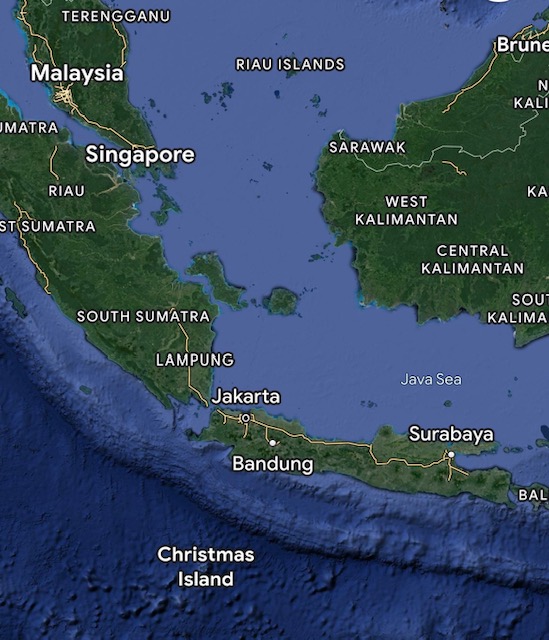
“Swarms of brilliant red land crabs are on the march across Christmas Island in the Indian Ocean (see photo). Up to 50 million crabs are swarming in a crimson carpet towards the sea in one of the natural world’s most epic migrations. The signal for this mass movement is the arrival of the first rains of the wet season at about this time and this year the migration kicked off when heavy rains fell on October 22; the speed of the migration then depends on the timing of the rains.

Most of their lives the red crabs live in forests, where they shelter from the sun as well as performing valuable forestry services, digging and fertilising the soil and keeping weeds in check. But the start of the wet season is the signal for all of them to scuttle off to the coast to spawn.

The male crabs set off before the females and when they eventually reach a beach they dig burrows for protection from competing males. When the females arrive, they mate before the males return to the forest, leaving the females to incubate the eggs. Then, with uncanny accuracy, the females wait until the moon reaches its last quarter and the high tide starts to turn before dawn. The females all leave their burrows laden with their eggs, mass along the shoreline, move into the sea and release the eggs. The eggs hatch as they touch the salt water and the crab larvae begin their initial growth stage in the ocean. As for the female crabs, once they have released their eggs, they turn around and return to the forest.”

Absolutely amazing!!

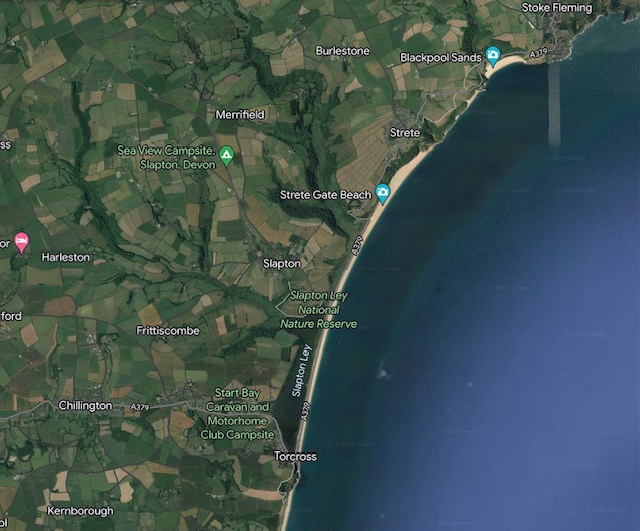
My brother announced some weeks ago he and his wife were off to Slapton in Devon, just to the South West of Dartmouth, for a Memorial Lunch. The name meant nothing to me so I went onto Google Maps:

…….. and found this from local guide John Cummings-Lee-Hynes (Note 2): “Slapton Sands is an outstanding piece of tranquillity and beauty; the beach is well kept by all who visit with deep shingle sands and clear clean water. To the left of the toilet is the nudist section and to the right miles of beach for families with paid parking facilities and a coffee cart.”

Dig in the sand a little deeper and you find that, seventy eight years ago, it was the scene of carnage and mayhem. For the stretch of sand and its inshore shallow lagoon were similar to Utah beach in Normandy, one of the beaches to be used for the invasion of France in June 1944. (Note  3) On 27th April a rehearsal for the beach assault resulted in some 300 men being killed as a live firing bombardment from battleships didn’t lift as planned. As if this wasn’t tragic enough, the next day nine German E-boats attacked the next wave of ships with torpedoes. The Battle of Lyme Bay cost the Americans over six hundred lives.

If you visit Slapton Sands today and, while you sit with your toes in the sand, someone tells you this awful story, you would find it difficult to reconcile the two. Those men who survived Slapton arrived on the sands at Utah Beach two months later. In the United Kingdom, today is Remembrance Day, remembering all those who gave their lives for our freedom.

Richard Remembrance Day 2022

www.postcardscribbles.co.uk

PS Yesterday in his column Paul mentioned today is the start of St Martin’s Summer, a few days of mild weather to thank Martin, a C4th Roman Officer, for giving half his cloak to a cold beggar.

Note 1 Real Tennis originated in France in the C12th and was popularised (actually this means probably 0.001% of the population!) in the UK by Henry V (1413-1422).

 It’s still played in a number of countries today and the word ‘tennis’ probably comes from ‘tenez’ – the French for ‘take heed’ ….. although these days the word heed is somewhat old-fashioned and we’d probably say ‘look out!’. The player serving the ball is known as a pillar; the post is part of the ‘gallery’ ……

Note 2 Does anyone know of someone with four hyphenated surnames?

Note 3 The American invasion beaches were called Omaha and Utah, the British Gold, Juno and Sword.

PC 307 I Am …..

Some weeks ago we went to a lovely supper party with local friends. Another couple were already there and one more arrived shortly after us. Introductions were made and, unless I repeat the person’s first name, I forget it in the blink of an eye. I am then of course embarrassed and spend time trying to think ‘do they look like a Robin or a Robert, or a Sara or a Serena’! The trick is to repeat their name when the introduction is made: “Hello Robin I’m Richard.” At least that’s what I am told works: I am still learning!

This particular evening remains in my memory as one of the guests wanted to immediately say who he was, as in: “I am a retired trade union official”. He could have said he was/had been a teacher/chemist/footballer/writer/artist or one of the hundred and one other descriptions of what people do for work or for love. I wanted to ask him more about it but my thoughts were more about why he felt the need to quickly identify himself to others, to label himself.

There’s a word from the Zulu language Ubuntu meaning ‘I am, because we are’; the longer phrase means a person is a person through other people, their community, their team – ‘umuntu ngumuntu ngabantu’. This suggests a belief an individual only has her or his existence through their interaction with others.

The actor William Hurt died in March. His obituary started “In the zoo of monstrous egos that is Hollywood, William Hurt took an almost Zen-like attitude to his profession. “I am not an actor. I am a nobody. I don’t exist.” he insisted. “But the work exists. The work is more than the actor.” This from a man who had three consecutive Oscar nominations for Best Actor!

Well, I know I exist (!) and I have a sense of my ‘self’ – “a person’s essential being that distinguishes them from others.” I am also aware I have an ego – “a person’s sense of self-esteem or self-importance.’

I practise yoga which is “a Hindu spiritual and ascetic discipline, part of which includes breath control, simple meditation and the adoption of specific bodily postures, widely practised for health and relaxation.” Many years ago, before I started practising yoga, I attended the London School of Economic Sciences for a weekly session in Philosophy. Fascinating – Year One at least! Year Two had an element of ‘meditation’ …… to which I recoiled. It was ‘an essential part of this course’ I was told …… so sadly I left. Blinkered? Maybe; that typical British attitude of not wanting to ‘give of oneself’ completely ….. and an inherent mistrust of those who are fervently preaching ‘their way is the only way’!! I think differently about meditation now.

I read recently that Buddhist teaching encourages one to distance oneself from ‘self’ and from self-concern, that the concept of ‘self’ is an illusion (!). I am a simple soul; I sense I live in my head, seeing the world, hearing the world and being aware through my other senses of the world around me. Am I an illusion? To whom? I don’t live in my big toe or in my arse, although some might challenge the latter! The sense I have of myself, confident and sure, or anxious and sensitive, starts within all those chemical goings-on inside my skull. If I try and explain it, explain that process, I run out of words and ideas.

After my Army career, I got into the habit of jogging wherever I was. Not a natural runner, it was a simple way of keeping fit, even though I found it hard. I felt ‘better’ afterwards (self-esteem up?). Then I turned to ordinary Hatha Yoga in 2002 as a way of gaining some more body flexibility – I could put up with the odd ‘omm’ I thought! I understood the physical benefits and progressed to hot yoga in 2009, and the particular sequence promoted by Bikram Choudray. Here, in addition to the physical demands of attempting the postures, the body, and one’s mind, has the challenge of the heat, which at times is suffocating!! Completion of the 90 minutes session was a real achievement. Tick in the box. Wow! I did it …….. and naturally I gave myself (that word ‘self’ again) a pat on the back and my self-esteem went up.

I understand how pure it could be to not focus on ‘myself’, able to live within and demand nothing of others. But life as I know it wouldn’t progress much if I spend my days sitting atop a pole, trying to plug into the ‘enlightenment’. Do I want to go and closet myself within some monastery, talking to no one, reading the ‘teachings’ of some guru, father, priest or even saint? It’s not for me; I actually think those that do are disengaging in real life, in the workings and struggles that beset us, the fulfilment of the hopes, dreams and aspirations within us. Does their way of life assist mine? I think not, unless we communicate on some subconscious level that I am not aware of. Give each human a good solid grounding, a teaching of values that mean something, and here each ‘religion’ contributes their own take on how to behave, how to grow, how to develop and we are good to go. 

Over ten years of doing yoga I still get that lift (endorphins?) when I complete a session; I feel good. If at that point some person doing a survey had asked me whether I felt better – absolutely!! I have started classes with a 60 second meditation; I have started with a 5 minute meditation. I understand a little of the ancient beliefs about yoga and meditation but I live in an age of enlightenment, of knowledge , of depth, so does my yoga give me more meaning to my life, does it enrich my soul?

Sure does ……. and I hope Buddha is smiling because of it.

Richard 4th November 2022

www.postcardscribbles.co.uk