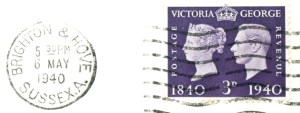
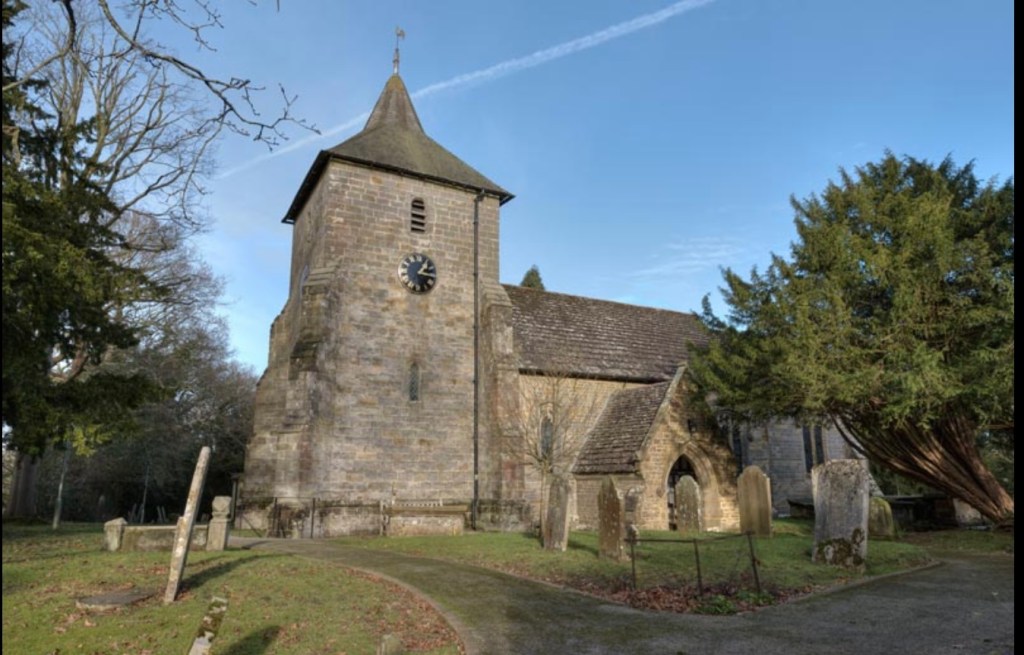
The Church of England is the established Protestant church of the United Kingdom and during my education attendance at Sunday morning church services was mandatory. In the holidays we walked the mile or so to an evening service in Balcombe’s little C15th St Mary’s Church.
It wasn’t until a new vicar forbade my parents from taking communion as they belonged to the Church of Scotland that I realised the huge variations and schisms that exist in our global belief systems.
Setting aside the major religions of Christianity (31%), Islam (24%), Hinduism (15%), and Buddhism (7%), and acknowledging that some 16% of the world’s population could be described as irreligious, the remainder follow minor religions such as Shinto, Taoism, Confucianism, Jainism and Judaism (0.2%). I have put a percentage against Judaism as in Western culture it must be one of the most identifiable ‘minor religions’ and its source the centre of continuing bloodshed and division over two centuries.
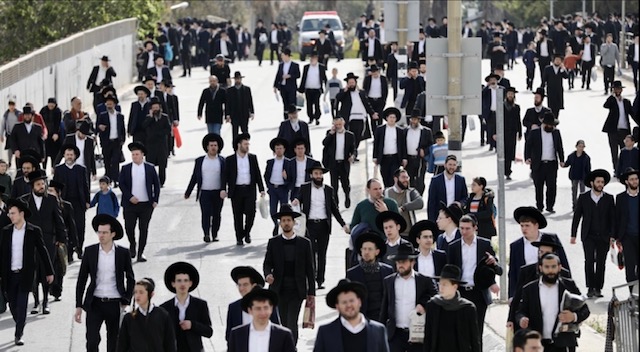
These scribbles are prompted by a recommendation to watch a four-part Netflix mini-series called Unorthodox. It concerns a young Hasidic Jewish woman called Esty Shapiro who flees Brooklyn and an arranged marriage and is taken in by a group of classical musicians in Berlin. It was fascinating and I realised I had little or no understanding of Ultra-Orthodox Jewish beliefs.
Ultra-Orthodox Jews strictly observe Jewish religious laws and separate themselves from Gentile society, as well as from Jews who do not follow the religious laws as strictly as they do. They live in closed communities, marriages are arranged and dress codes strictly observed. The men wear black or navy suits and a white shirt, and skull caps, Fedoras or Homburg hats; there are rules about the length of the hair down the side of their face. Women wear modest dresses. Stroll around Stamford Hill in London and you’ll be surrounded by some of the 30,000 Ultra-Orthodox Jews who have settled here, particularly as pre-war refugees and post-Holocaust survivors. Walk around Williamsburg in New York, where Netflix’s ‘Unorthodox’ series is set, and you could be forgiven for believing you were not in America.
For those of us who do not regularly interact with minority groups the film Witness (1985), with Harrison Ford and Kelly McGillis about an Amish boy who witnesses a murder, gave us an insight, albeit through the eyes of a producer intent on making an interesting and dramatic thriller, into the Amish community of Pennsylvania.
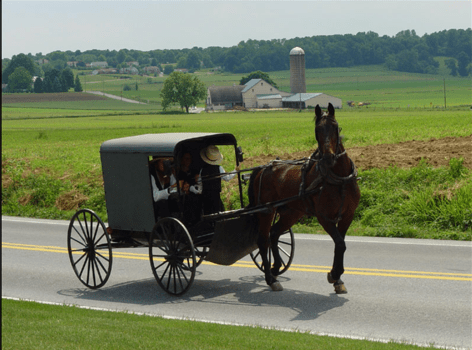
Amish transport
The history of the Amish church began with a break between the Swiss and Alsatian Mennonite Anabaptists in 1693. Today the Old Order Amish, traditionalist Anabaptist Christians, of whom the Mennonite Church is another denomination, are known for their simple living, plain dress, Christian pacifism and slowness to adopt many of the modern conveniences that non-Amish take for granted. Some 350,000 live in the USA and a further 6000 in Canada. The Amish communities operate their own schools and a great emphasis is placed on church and family relationships.
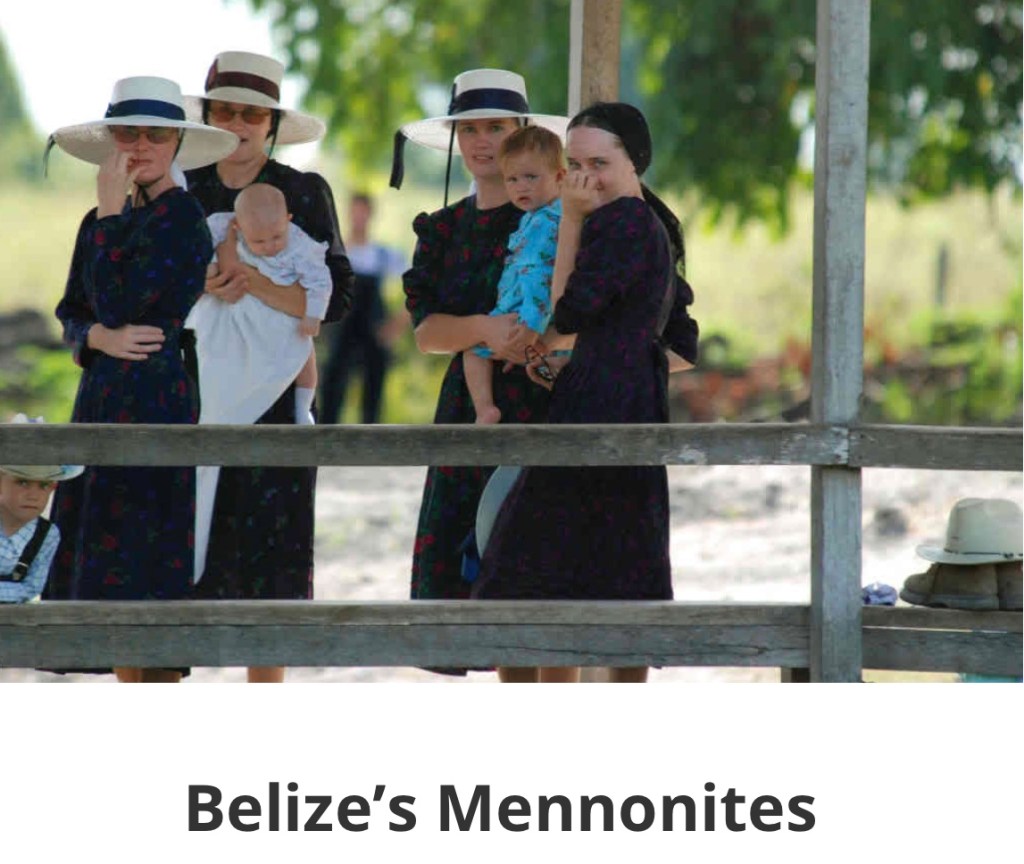
Mennonites can be split into roughly three groups, Old Order ones who eschew modern technology, Conservative who use modern conveniences like cars and telephones but hold firmly to traditional theologies and wear plain clothes, and mainline Mennonites who are virtually indistinguishable from the general population. Mennonites have settled in 87 countries spread across the planet but I first became aware of them in Belize, when I went there in 1983.
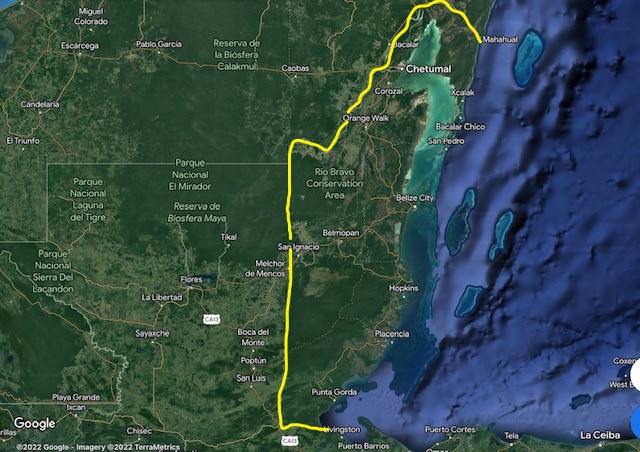
Belize, in Central America, outlined in yellow
They had settled here in 1957 when it was a British Colony, British Honduras, and in particular in Orange Walk, Cayo and Toledo Districts. The communities have established hugely successful organic farms that now provide some 85% of the nation’s milk, cheese and other dairy products.
Another minority group, The Plymouth Brethren, was founded in 1848 in Plymouth, England by John Darby, who believed the Anglican Church was too close to the Catholic Church in doctrine and ritual. Today some 50,000 members are spread over 17 countries. Traditional marriage and family life see women subservient to men and children expected to marry within the fellowship.
The men are clean shaven, keep their hair short and don’t wear ties while the women should not cut their hair but wear scarves. Everyone starts the day with communion at 0600 and its members will not use the internet or watch television. The Brethren reserve all social activities for those with whom they celebrate the Lord’s Supper, excluding family members who are not members of the church. A client of mine didn’t agree with his parents’ devotion to the Plymouth Brethren diktats and hasn’t seen, been allowed to see them, in decades.
Francisquinha (PC 172 March 2020) pops her head around the door. “But you haven’t even mentioned The Church of Jesus Christ of Latter-day Saints aka The Mormon Church, Jehovah’s Witnesses or The Church of Scientology, to name a few omissions!”
“Ah! Mention Scientology and I think of Tom Cruise and my stepfather.”
“Your Stepfather? Was he a member?”
“No, but a favourite Godson Tony Freeland became a member and shunned his friends, family and twin brother John. His parents were distraught!”
“And isn’t The Mormon Church concentrated in the west of the USA?”
“Of course! Its early leaders founded the state of Utah and one third of all six million American Mormons live there, mainly in Salt Lake City.” (Note 1)
These alternative beliefs create a way of life for their adherents, often one which is all-embracing, encompassing. The common theme to all these groups, and maybe with any ‘religion’, is a suspicion of outsiders, a belief that their way is the right way, in fact the only way ….. and ‘if you are not with us you are against us’. A worrying thought when the population of the planet cries out for more understanding and less polarisation.
Confident groups should not only welcome new arrivals but happily say farewell to those who wish to leave. Those trying to ensure continuing obedience often through coercion don’t get my vote.
Richard 21st October 2022
http://www.postcardscribbles.co.uk
Note 1 The church has some 16 million members
 postcards