PC 198 Tales from Northern Ireland (3)

I went back to Northern Ireland in October 1975. This time 39 Medium Regiment’s area of responsibility was centred on Her Majesty’s Prison (HMP) The Maze (aka Long Kesh). The prison housed members of the various paramilitary groups, IRA, Provos, UVF, etc. The UK Government had introduced a policy of ‘internment’ where those out to cause trouble were imprisoned, without the benefit of a proper trial by jury. As I write this over forty years later I wonder how it had become a politically-acceptable policy.

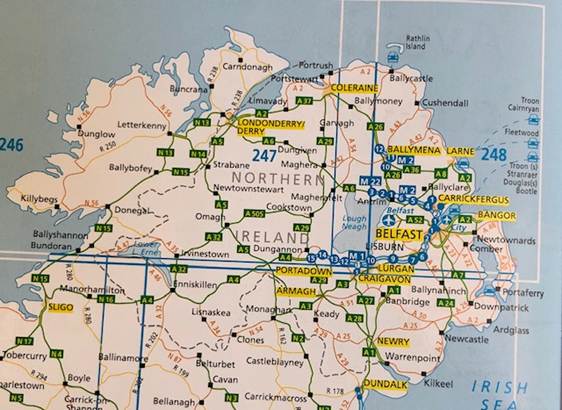
Our primary responsibility was the prison’s external security; others included an area of North Armagh and a permanent VCP at Aughnacloy, just before the border with The Republic. Aughnacloy is due west of Portadown and south west of Belfast

This was an intellectually challenging tour as I was the regimental Public Relations (PR) Officer dealing with the press from our recruiting area of Birmingham, interfacing with the PR offices at HQ Northern Ireland in Lisburn and keeping the soldiers’ families aware of what their loved ones were doing.

I decided to produce a fortnightly magazine and called it TNT, for Three Nine (39) Times, although the pun was very obvious in the context in which we operated. The four Regimental batteries were cajoled, encouraged and hounded to produce some news and stories about their particular operations!
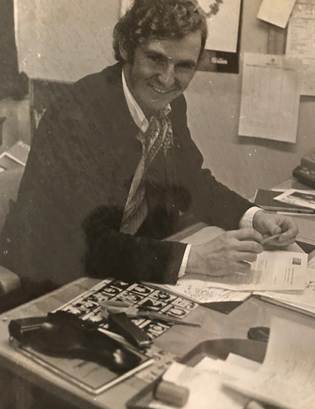
In my office. I wore civilian clothes most of the time and grew my hair!

My TNT magazines were printed by a company in Portadown, a town some 20 miles from The Maze. For travelling around I had a hard-topped Land Rover that, in an effort to disguise its military ownership, was painted grey and cream; except that is for parts of the inside….. which were Army green!! Portadown was a reasonably peaceful place and Gerry was a small bundle of Protestant energy. We got on famously and during the tour produced some 300 copies each of the 8 issues.
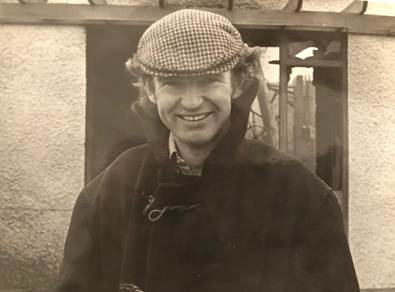
Visiting a recently blown-up farmhouse. The bodies were inside.

For the battery guarding HMP The Maze’s perimeter, this was an extremely tedious, repetitive and boring task, although the possible reaction to an unprofessional job was obvious. There was the added frustration that the sentries in the watch towers could see into the prison, could see a regime and culture that had many critics and maybe secretly wished the roles were reversed! HMP The Maze was run by the Prison Service of Northern Ireland. One example of allowed prisoner behaviour was the blanket protest when the inmates wore only a blanket and smeared their own excrement over the cell walls. Our soldiers took a dim view of this behaviour.
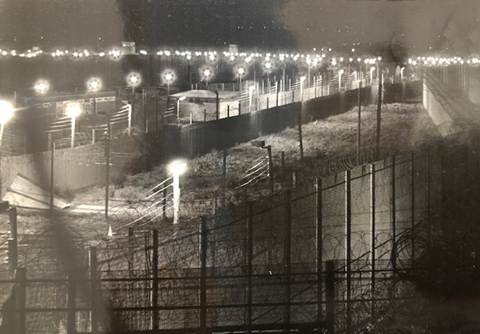
My role during the tour put me on the duty officer rota, manning the operations room on a shift basis. I was due to take over from Major John Harman, the Regimental second-in-command, one morning at 0800, he having completed the graveyard shift (midnight to 0800). He greeted me with a big smirk on his face and said:

“I was just completing the handover notes and thought I might be late for breakfast in the Officers’ Mess. So I picked up a telephone handset (ed. from one of the bank of three) and dialled the Mess number. Just at that instant one of the other phones in the operations room rang. I reached across and said: “Ops Room 39! Just a minute, I am on the other line.” …… only to hear my own voice in the earpiece. I had phoned myself!”

Piggy-backing on the relationship that Zack Freeth (PC 197) had established with Julia Morley and the Miss World Organisation, I persuaded Julia to bring the then current Miss World, 18 year old Wilnelia Merced to Northern Ireland (Note 1). We visited a children’s home …. and entertained the new Miss World for three days, flying down to the VCP at Aughnacloy and around North Armagh.

As part of the visit the Sergeants’ Mess invited her and Julia to dinner. In my capacity as escort (!) at an appropriate time I knocked on Wilnelia’s bedroom door to take her across to the mess. She looked like someone off the set of West Side Story, leather bomber jacket and extreme short skirt. At another time and in another place completely gorgeous but she would have been eaten alive by the randy chaps in the mess!! I persuaded her with some difficulty to change into something less, how should I say it, sexy!

On the last day of her visit the officers’ mess laid on a curry lunch (Note 2), where Wilnelia was the guest of honour. The word got out and it was possibly the best attended curry lunch I have ever been to!! After lunch I borrowed the CO’s staff car and driver and took Wilnelia and Julia to Aldergrove Airport. There we were met by the VIP conducting officer and taken to a private room. Black Bushmills whiskey, one of the best things to come out of Ireland, was produced. After thirty minutes we were warned the flight gate was closing. Another twenty minutes and a member of the cabin crew came and escorted the VIPs to the foot of the aircraft steps.

A few weeks later another four months ‘at Her Majesty’s pleasure’ ended.
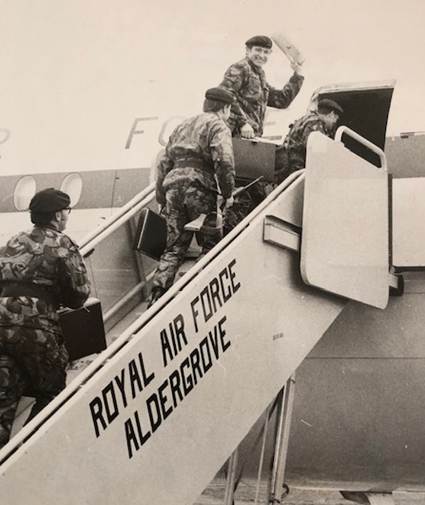
Little did I know then that in 1986 I would join the Belfast-based global aerospace company Short Brothers. As part of the sales team I travelled internationally a great deal from the London office – but occasionally had to visit Belfast. On my one-week company induction I was booked in to the La Mon Hotel. Someone had a sense of humour; in February1978 the hotel had been bombed by the IRA in one of the worst atrocities of the troubles which had killed 12 people and wounded another 30.

Richard 1st October 2020

Note 1 In 1983 the Puerto Rican married the British entertainer Bruce Forsyth and became Lady Forsyth-Johnson.

Note 2 A ‘Curry Lunch’ was an established monthly Sunday event in most officers’ messes throughout the world.
PC 196 Tales from Northern Ireland (1)

Northern Ireland has, for reasons which will become apparent if you read these tales, featured a number of times in my life. For those unfamiliar with how this part of the United Kingdom came into being and without writing three volumes of a book (!), the island of Ireland was partitioned in 1922 as a result of pressure to create a southern Catholic republic. Protestants who had settled mainly in the north wanted to have their own ‘province’. Part of the island became the six counties of Northern Ireland and de facto part of the United Kingdom; the south eventually became the Republic of Eire. Nationalist elements in the south agitated for a united Ireland; some still do! For a time the north was a mecca for employment and over the years many Catholics migrated there. Today the Province is evenly populated by both Protestants and Catholics. Fifty years ago the nationalists, mainly in the form of the IRA, banged the drum for change; they were resisted by various Protestant paramilitary groups.

In August 1969 the then Prime Minister of the UK, Jim Callaghan, announced that troops were to be deployed to Northern Ireland to try to calm the inter-sectarian violence that was spreading across the province. I was sailing in the Baltic; it was the summer after all and I was due to go to university the following month. My period of military service so far had been in the UK and in Germany, and rather dull; I remember thinking I might miss an opportunity for some action. Little did anyone realise the conflict would go on for almost thirty years until the Good Friday Agreement was signed in April 1998 (Note 1). It defined a large chunk of my military service, as I took part in two operational tours, 1973-74 and 1975-76, each time spending four months in the Province. When I resigned my commission in 1985, I joined Short Brothers’ London Office; its Head Office was in Belfast!

I had graduated in July 1972 and, with my Civil Engineering degree in my back pocket, returned to my Regiment in Lippstadt, Germany. A year later I got promoted and moved to a regiment, based in Sennelager near Paderborn; 39 Medium had been earmarked for a Northern Ireland tour in October that year.

We put our artillery equipment into ‘light care & preservation’ and practised infantry roles such as patrolling, dealing with unrest, intelligence gathering and searches. In mid-October 1973 450 of us flew to RAF Aldergrove to start our ‘24/7’ tour; we had three days off in four months.

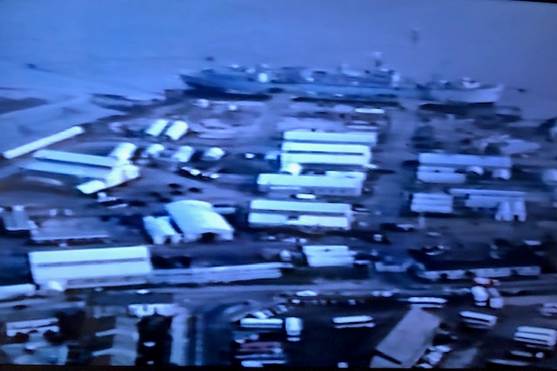
Our regimental home was Fort George, an old Royal Navy Storage depot on the western bank of the River Foyle. Alongside in the river was a Royal Navy ‘depot, maintenance and repair’ ship, HMS The Rame Head. Those officers posted to her seemed to include the more incompetent, lazy, and dangerous members of Her Majesty’s Navy.

Fort George, Londonderry. A still shot from a cine film!

We were accommodated in a mixture of Nissen huts and large draughty old storage hangars, in racks of bunk beds; The Hilton it was not! Incongruously, between the huts was a caravan that sold everything you needed – cigarettes (obviously), crisps, fizzy drinks, lads’ magazines, newspapers, sweets and chocolate. Over the centuries the tradition had been established that these entrepreneurs, these Chogy Whallahs, mainly of Indian decent, would provide such a service. The Regimental Second-in-Command engaged them, agreeing a percentage of the turnover that went into regimental funds. He once remarked that these guys often knew if you were going to be deployed operationally before the Ministry of Defence told you!

Our regimental patch covered the centre of Londonderry, the grand city bisected by the River Foyle know to the Catholic population as Derry, west to the border at Buncrana and north to the border at Muff. It was a real mixture of commercial properties and shops, dense housing and countryside and included the sprawling Catholic council housing estate of Shantallow. (Our area of responsibility did not include the City’s Bogside.)

Shantallow Estate shops A still shot from a cine film!

Sadly the time when the British Army had been seen as a force for good, coming between the Protestants and Catholics, each with their own years of deep-rooted bigotry and hatred, had long past; Bloody Sunday in January 1972 was the pivot on which it turned. Suffice to say as we patrolled the streets, either on foot or in Land Rovers, looking for trouble-makers and those out to bomb, kill and maim, we became the target of hate, suspicion and loathing. I recalled the ‘Internal Security’ training during my time at Sandhurst. In the films, the ‘rioters’ in some outpost of Empire were always led by a red T-shirted chap; the colour of their skin also made them stand out. Not so in Northern Island where everyone looked like everyone else!

I guess I had lived a very privileged life up to this point and had little experience of those living at the bottom of the societal heap. That all changed when my soldiers got to know Shantallow. Sometimes we searched these houses, acting on an intelligence tip-off that ‘someone of interest’ (Note 2) would be there. Sometimes we were lucky and were able to hand over an individual to the RUC (Note 3). During our tour we found weapons stuffed in garden sheds and a small amount of Semtex, the explosive of choice of the IRA; sometimes hundreds and hundreds of hours of effort produced scant results.

Hidden in a garden shed in Shantallow

On one early morning house visit I realised there were no beds in evidence, just piles of dirty clothes and coats on top of mattresses on the floor. In four months I only saw one bed and was ashamed to see this level of deprivation in the United Kingdom.

To be continued ……

Richard 17th September 2020

Note 1: Incidentally, John Hulme, a Northern Ireland politician who was largely responsible for keeping the search for peace on track, and was awarded the Nobel Peace Prize for his efforts, died on 3rd August 2020 aged 83.

Note 2: One of the ‘people of interest’ was a Martin McGuiness, who denounced violence after the Peace Accord and became the Deputy First Minister, alongside his bête noire, Dr Ian Paisley.

Note 3 The Royal Ulster Constabulary (RUC) was seen as a Protestant police organisation and therefore another target for the bombers and stone-throwers

PC 512 Does it Matter?

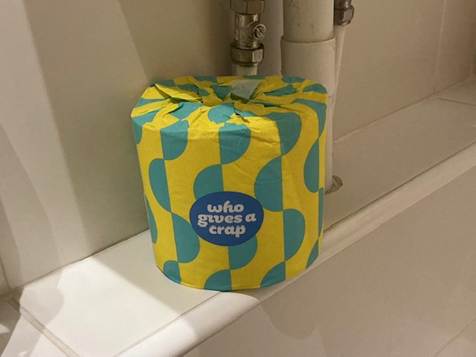
Talk about choosing a title for some weekly scribbles with the opportunity to range far and wide! Maybe I should simply focus on personal issues like, for instance: ‘Do you insist on the loo seat being left down?’ OK! Immediately we are divided between those of you who call the ‘water closet’ the loo and those who call it the toilet! Or you might be confused and use the term ‘lavatory’ which, if I was being pedantic, is ‘a fixed basin with running water’ but can be used to refer to the whole room with a toilet (aka loo) and basin. We had a lunch party last week and the loo seat and lid were left up, left down, just the lid up ….. despite us having one of those soft closure lids! (Note 1) I hope our guests smiled when they saw that we buy our loo paper from ‘Who Gives a Crap’!

Doesn’t matter, does it, what you call it? And sitting down with friends for lunch, it doesn’t matter whether you call the piece of material to protect your clothes a napkin or a serviette, does it? Providing it’s material not paper!

It doesn’t matter how you perform a yoga posture – we are all different mentally and physically and no one should make any judgments. It simply does not matter – until the ego taps you on the shoulder and asks why you haven’t…..! And if you believe that the practice of yoga, hot or not, could be ego-free, try it yourself. You might even encounter a group ego!

Recently there have been television crime dramas based in Bristol and Belfast, hot on the tails of one about Brighton’s police force and how they cope with the mayhem that others see as ‘having a night out’! The latest Belfast series covers migration in Northern Ireland, overlaying the still-simmering religious divide.

It reminded me of the current ‘stand-off’ between Northern Ireland’s Orange Order (Note 2) and the people of Drumcree. As Max Hastings, writing in The Times, says: ‘The Orange Order wants to demonstrate its claimed legal entitlement to stage a sectarian march through an overwhelmingly nationalist housing estate in Drumcree.’ It mattered in 1857 when a government report stated: ‘The Orange system celebrates its festivals …. which lead to violence, outrage, religious animosities, hatred between classes and, too often, bloodshed and loss of life.’ Nothing seems to have changed in over a century and to those of us who live in Great Britain it’s anachronistic in the extreme. Surely time to abandon such wilful provocations as the Drumcree march and realise how much this would matter for the greater good?

Last month one of my postcards was titled ‘Communication’ and this month we have had another example of poor communication …… and it matters. The British Museum in London is exhibiting the Bayeux tapestry for the first time since it left these shores for France in 1080 …. and the 70m long display has attracted thousands of people wishing to view it. The exhibition has presumably been years in the planning, but no one seemed to anticipate the potential number of visitors. Long queues developed, not helped by people staying too long in front of the exhibit – clearly not allowed or imagined! They could have installed a moving walkway which would have helped.

But the lack of communication was obvious when early this month they had to close the exhibit to the public as they were hosting some corporate event. These things don’t happen overnight ….. so why didn’t they block out entrance to the public months ago? Some people travelled a long distance only to be told they would get a refund of the ticket – but no recognition that the British Museum’s poor organisation and communication had led to other nugatory travel and hotel expenses. Reminded me of the Hotel Fasano in Rio de Janeiro. There had been no warning that, during our short stay, the roof-top swimming pool would be closed for a corporate event. We the poor public are second best to corporate money. But timely communication would have helped.

I did come across a new item some months ago and thought ‘good for you’. Having been through the difficulties and agony of divorce, I was interested in the story about a woman whose second divorce cost both her and her husband £80k. It prompted her to start offering divorcing couples a cheaper option than the adversarial one that lines the pockets of solicitors and lawyers. She had clearance from SRA, but lawyers with a vested interest in the current system complained and she was up before a judge for offering unqualified advice; she could have gone to prison! Financial reductions in the state-funded Legal Aid budget have reduced the number of cases it can support from 180,000 to 10,000. The judge recognised there had to be a better way for Joe & Jill Public to access affordable legal advice and suggested she continue. A victory for common sense.

And, of course, it matters when you buy a bunch of fresh Basil and two days later it looks like the flopped ears of a hare. Last week I thought there must be a better way of keeping it fresh. The solution is to place it in a container with a little water, and a plastic bag over the top, essentially creating a little moist greenhouse. The last leaf was as fresh as the first.

And in the wider context of life, nothing really matters, however much we agonise about this and that.

Richard 9th October 2026

Hove

www.postcardscribbles.co.uk

Note 1 I hadn’t intended to mention this, but I scribbled about loo paper in August 2015 (PC 47) and followed that postcard with one about ‘The Loo’, with the famous Mr Crapper, in November that year (PC 54). I could email these to you as they are time-expired on WordPress.

Note 2 After King William of Orange (King William III) who invaded and secured Ireland for the Protestant crown by defeating the Catholic King James II in the Battle of the Boyne in 1690.