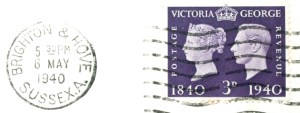
PC 320 The Atacama (2)

We continue …. (see PC 319) ……

In my first postcard about The Atacama I mentioned San Pedro being known locally as the ‘Clay Town’. A few kilometres to the south east lies the little town of Toconao, known as the ‘Brick Town’. Unlike San Pedro’s red clay rendering, the houses here are faced with bricks and stone from a nearby quarry.
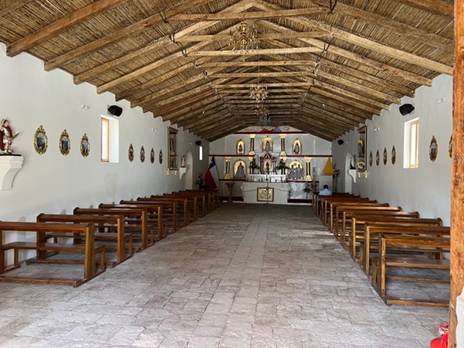
Toconao church; its door is made from cactus wood

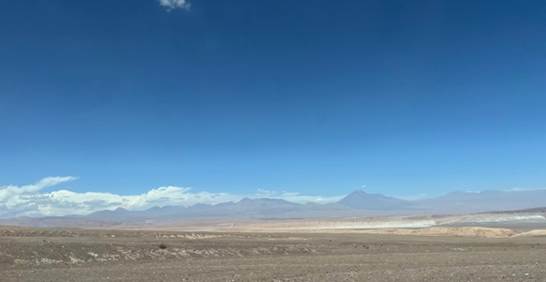
Such is the height of the extinct volcanoes that make up the Andes range, running some 8900kms from the southern tip of Chile to the Caribbean Sea, on the Atacama plateau they are always there, on the horizon, out of the corner of your eye. (Note 1) 
One lagoon worth visiting is Tebinquinche, for it had enough water for a swim, although the salt content was so high floating was the only option! The local tourism organisation had built a changing and showering block, both essential with the heat and the need to rid oneself of the covering of salt.
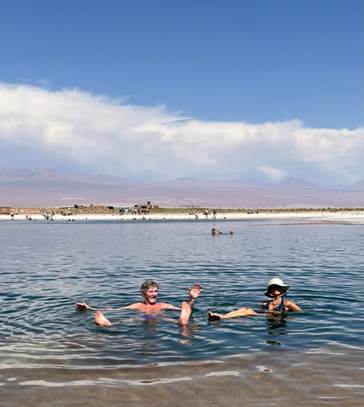
We were joined on this outing by a German couple and another from France. The elderly German was conspicuous as he was 2.02m (6ft 8”) tall and naturally had played basketball!! I asked the Frenchman Pierre where he came from and he said Lyon. After the normal pleasantries I said I had recently watched the film ‘Resistance’ on British television, about Marcel Mangel (aka Marceau) and how he aided the escape of hundreds of Jewish children out of the sadistic clutches of Klaus Barbie during the Nazi occupation of Lyon. Interestingly his wife immediately said that no one talked about that time, reflecting the difficulties any population has living under foreign occupation, how whole families were torn apart by shifting loyalties and how the repercussions echo down the decades to this day.

An overcast sky meant the ‘Stars & Fire’ tour was cancelled so we missed the opportunity to lie on our backs at midnight and gaze into the heavens. By reputation the skies in the deserts of the world are wonderful. Naturally volcanoes have hot springs and geysers. Andrea and Andreas, our Berlin friends from our first excursion, went out to one, the early hotel departure time dictated by when the geysers normally gush. When they arrived it was about 0615 and -8C, but fortunately soon warmed up!

Our third venture into the dry landscape was to Rainbow Valley (Valle del Arcoiris), lying in the Rio Grande basin about 90kms from San Pedro. Our Trekana guide this time was an ebullient Argentinian called Nicholas, who had married and settled in San Pedro. Joel, who runs a leather fashion-ware company in Boulder, Colorado and his wife Elke who has an online leather bags business (www.byelke.com) were our companions.

The Rainbow Valley landscape was extraordinary, absolutely extraordinary. We went from: “Wow!”
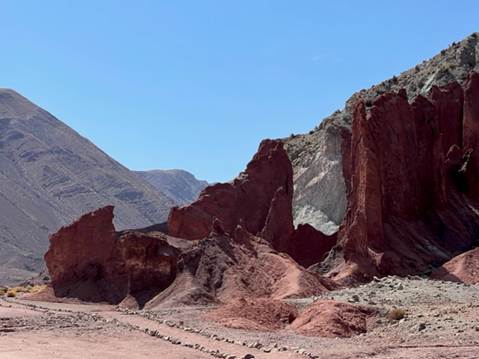
……to “blimey!”
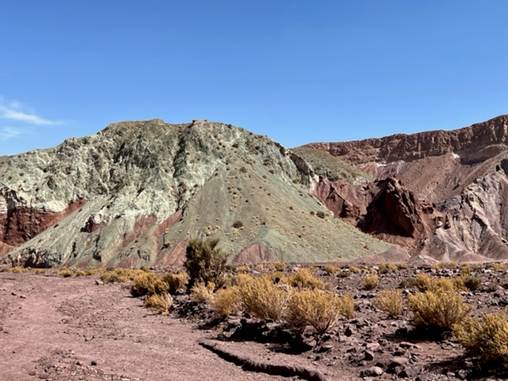
….. to an unspoken: “I really can’t believe this!”
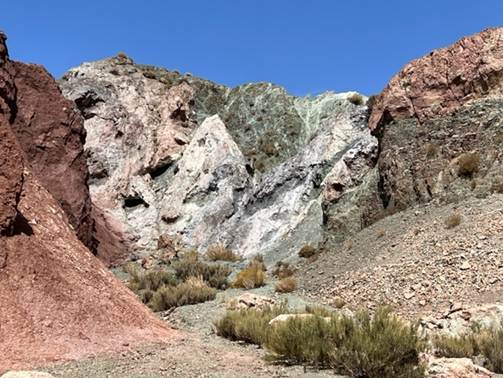
The valley obviously owes its name to the various colours of the rock formations – red, beige, green, white, yellow and blue, overlaid with white salt and under a deep blue sky. We have all seen the results of a copper roof oxidising over some years, the roof developing a blue/green patina. Here it was in nature!

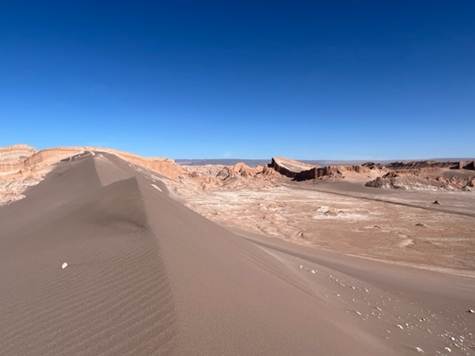
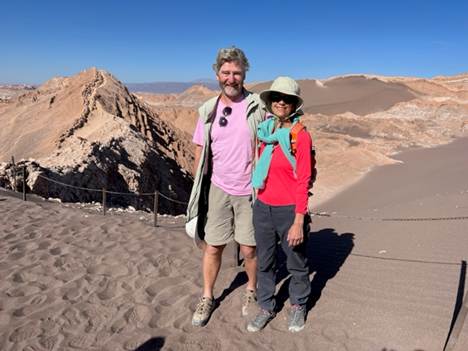
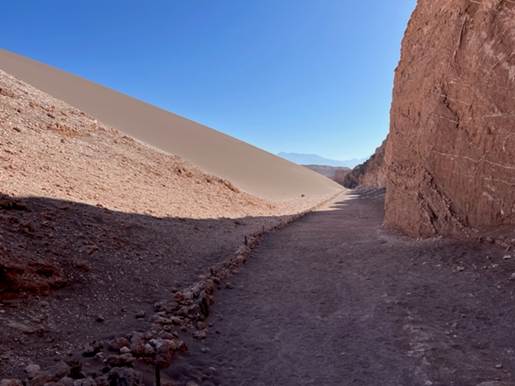
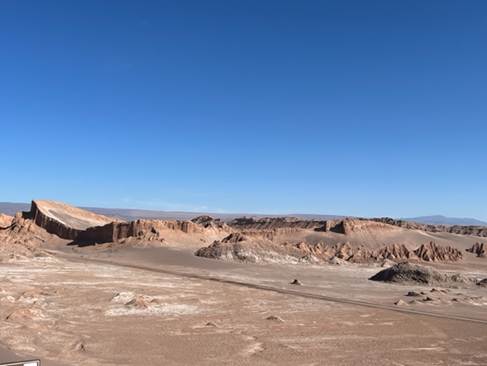
On the day of our flight back to Santiago, we had breakfast overlooking the Valle de Luna, before driving down into it for a 45 minute walk. It’s not often you can have some fruit, yogurt and coffee with this sort of view:
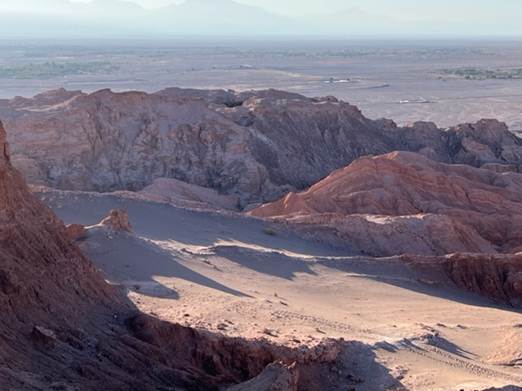
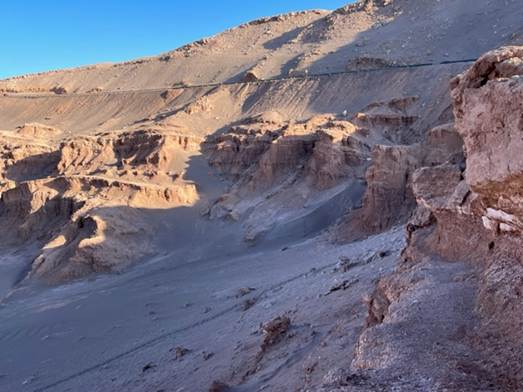
Our companions on this trip were eight Chileans up from Conceptión, just south of Santiago, for a long weekend; four of them were surgeons. Leonardo was married to a surgeon but was actually a real estate/property developer and thinking of emigrating to New Zealand. Being British my thoughts go east and around the world to ‘Down Under’. If you’re Chilean you simply look west!

Conspiracy theorists and other nutters have often claimed that the moon landing of 1969 was faked! Well, they could easily have been somewhere here in Luna Valle, such was its dramatic mixture of craters and cliffs and dunes and aridness.
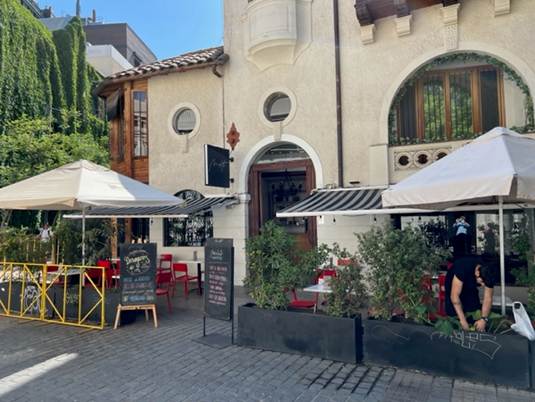
And how do you get to the Atacama? Unless you’re rich enough to fly your private jet into Calama, us mortals fly via Chile’s capital Santiago. We bookended our Atacama trip with two nights in the Ismail 312 hotel, just on the north side of Barrio Lastarria. Our first night was disturbed by a loud party across the river and shortened by the airlines requiring one to be at the airport three hours before our departure time! Drifting around Barrio Lastarria before our flight back to Rio, we recognised the restaurant that Franco took us to in February 2017 on our first trip to Santiago (PC 89)
The more I travel, the more I need to understand what makes a country tick, at least understand how they got to be what they are today and their place on the world’s stage. So having established that copper is Chile’s major export, it was interesting on this trip to learn that Lithium is being extracted from deep beneath the salt flats of The Atacama. Lithium (Li) is the least dense metal and the least dense solid element and has been used to treat depression and mania for centuries. More recently it’s become the star of modern battery development, so important in the burgeoning Electric Car industry. And by the way, it’s unlikely you’ve eaten Chilean cherries recently, as almost 9/10th of the country’s total production, for instance some 352,000 tonnes in 2021, is exported to China.

As far as Chile is concerned, its small population of 19.5 million gives it a GDP per capita US$24,474. Compare this with its continental neighbour Brazil, with its population of 214 million and GDP per capita US$15,553, some 60% of that of Chile. (Note 2 & 3)

So pleased we now have some experience of The Atacama; a beautiful, wild, unearthly and fascinating place. I urge you to go and see it!

Richard 3rd February 2023

Rio de Janeiro

www.postcardscribbles .co.uk

Note 1 The highest mountain, Aconcagua and 6961m high, lies in the Mendoza Province of Argentina, just to the north east of Chile’s capital Santiago.

Note 2 The United Kingdom has a population 67 million and GDP per capita US$44,920.

Note 3 Chile is ranked 58, Brazil 82 and the UK 26 in a comparative list of the GDP per capita of 190 countries.
PC 319 The Atacama (1)

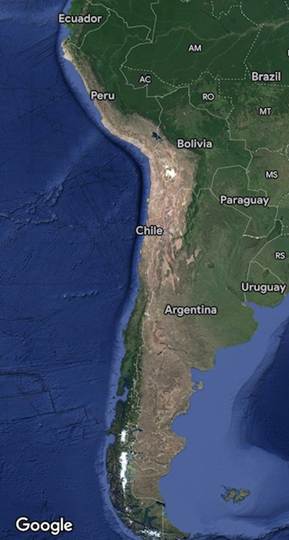
Chile has always been an intriguing country, so long and so thin, stretching for over 4270kms from its border with Bolivia in the north to its tip on the bottom of the Americas and, on average, only 177kms east to west. For its entire length the mountain range of The Andes defines its geography and ecosystems. But the geo-political entirety of the country only came together in the 1880s, when Chile triumphed in the War of the Pacific and annexed Peru’s southern shoreline and Bolivia’s entire Pacific coast, so land-locking the latter country. At the same time, its troops conquered the indigenous Mapuche people and their land south of Santiago was subsumed into modern Chile.

Down south, the region known as Patagonia is shared with Argentina, the Chilean side characterised by glacial fjords and temperate rainforest whilst it’s the Argentinian side of the Andes that has arid steppes and deserts. North of the squeezed middle with the cities of Santiago (See PC 89 Franco’s Santiago 2017) and Valparaiso lies one of the driest places on earth, the Atacama desert and to its north east lies the tourist town of San Pedro de Atacama.

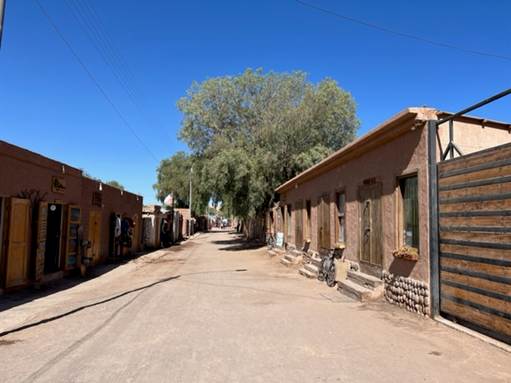
Main Street, San Pedro

Distinguished by the reddish colour of its clay buildings, it’s …. “a town set on a high plateau in the Andes mountains of north-eastern Chile. Its dramatic surrounding landscape incorporates desert, salt flats, volcanoes, geysers and hot springs. The Valle de la Luna nearby is a lunar-like depression.”

Enough of a basic geography lesson, or reminder (?) Why, you might ask, is this postcard seemingly from Latin America? As Covid travel restrictions eased, in November last year we planned to return to Rio de Janeiro and thought about ‘doing the Atacama and Patagonia’, such is the success of Chile’s tourism advertising; these two, plus Easter Island, have become the go-to destinations.

Luckily one of my Godsons is married to the co-founder of a UK travel agent who specialises in Latin America (www.latinroutes.co.uk). The first draft suggestions from Latin Routes covered both the Atacama and Patagonia. Scrutiny of the journey from the Atacama to Patagonia revealed an early start, two interconnecting flights and, after arriving in Punta Arenas Airport late in the day, a six hour trip in a 4×4 to the lodge. This would not have been a holiday so Patagonia will have to wait for another time!

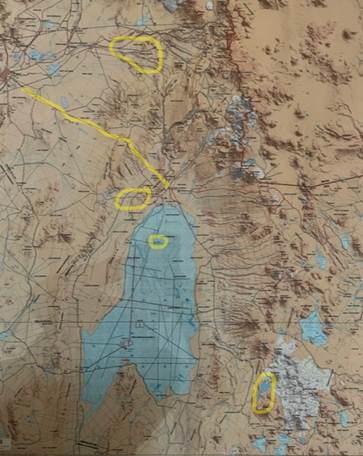
San Pedro in the centre, mountain lakes bottom right and Rainbow Valley due north

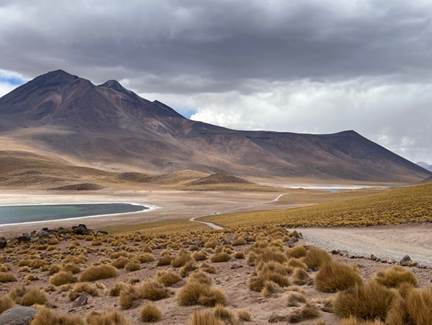
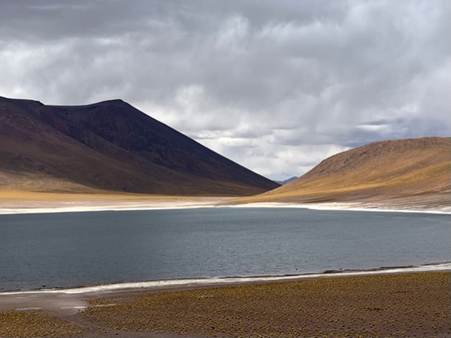
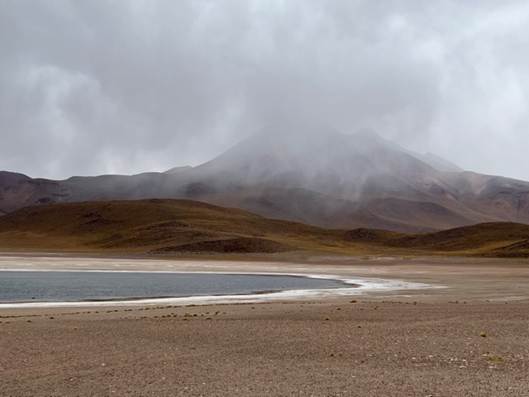
I hadn’t realised how much one might be affected by a change of altitude. Rio de Janeiro is, obviously, at sea level (doh!) and Santiago at 570m. We arrived in northern Chile and drove into San Pedro de Atacama, which lies at 2450m. Someone mentioned we might feel its effects but I can only describe it as walking across a swinging rope bridge, not quite sure where my next step would be and whether my legs were moving independently! On our first excursion we ended up at the mountain lakes of Miscanti and Miniques at 4150 metres.

Fortunately I was wearing a T shirt from the Dutch ‘Iceman’ Wim Hof with ‘Breathe …. Motherf***kers’ emblazoned across the chest! You needed to consciously breathe full breathes and take short steps.

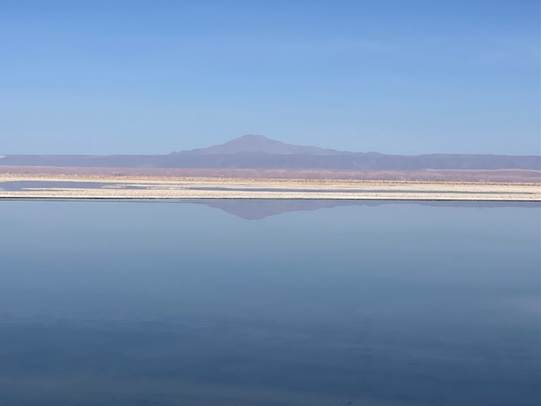
For our first excursion our Trekana guide Mauricio had met us at our Noi Casa hotel and we joined Andrea and Andreas from Berlin and another couple from Madrid. We were staying in the same hotel as Andrea & Andreas and got to know them; we hope to keep in touch. We drove out to the large salt flats of Laguana Chaxa, the ‘Salar de Atacamas’, lying some 30 minutes south of San Pedro in the Los Flamencos National Reserve.

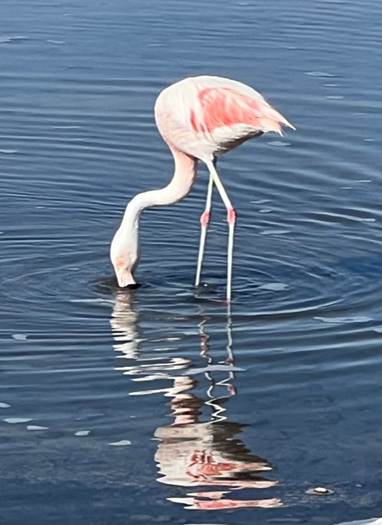
Actually ‘large’ is an inadequate word, as they extend some 150kms south, are 65kms wide and over a kilometre and a half deep. ‘Deep’ as in salt minerals; the surface water is only about 3 feet deep. (Note 2) The attraction here is the three species of flamingos, the Chilean, the Andean and the James’.

From there we went up into the mountains (see map), to those charming lakes of Miscanti and Miniques. It freezes hard up here in the winter but we were lucky with some sun, before a shower of rain. (Note 3)

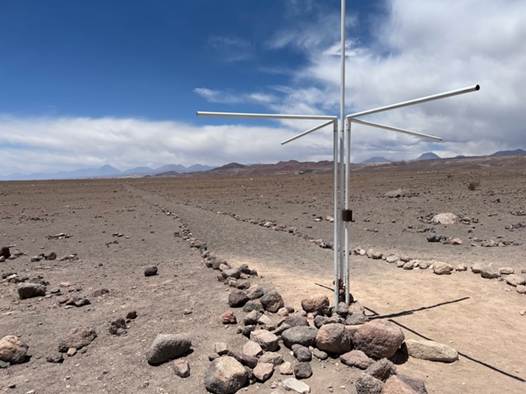
We drove back towards San Pedro de Atacama and stopped for a picnic lunch at the junction of an old Inca trail and the Tropic of Capricorn (Note 4). Just a line on a map, this latitude of the ‘Tropic of Capricorn’, but walking out down the dusty Inca trail, away from everyone else, lovely to let one’s mind imagine the traffic this path had experienced thousands of years ago; footprints, sandal impressions, the hoof  tracks of donkeys and llamas, but now simply dust.

The Tropic of Capricorn crossing an ancient Inca trail moving off northwards

Part Two to follow next week.

Richard 27th January 2023

http://www.postcardscribbles.co.uk

PS As an aside, some of you will have read my postcards from our trip to the north of South Island New Zealand in 2020 (PCs 169 and 170), when I wanted to visit the sand spit where, in August 1877, a seventeen year old girl, who later became my great grandmother, was shipwrecked and rescued some days later. I needed a travel agent with very local knowledge of the area, so went onto Google Earth, zoomed into the town of Nelson and located a travel agent on Trafalgar Street, World Travellers. Then it was a simple task to ask by email whether they could do the international stuff in addition to the local detail. The result was absolutely perfect.

Note 1 Chile is the most prominent example of an elongated type of territorial morphology; other examples include Norway and Vietnam.

Note 2 Compare with the Pantanal, (see PC 17 and 20 2014) the world’s biggest wetland, some 800kms north to south, 500kms east to west, with a height difference of some one metre over its whole length. The Pantanal lies east over The Andes from The Atacama, straddling the borders of Brazil, Paraguay and Bolivia. Oddly they are at about the same latitude, one of the driest places on earth and one of the wettest; separated by the great mountain range of the Andes!

Note 3.Despite it being summer in the southern hemisphere, the months of January and February mark the Altiplanic winter here, with occasional heavy rain storms. Bizarre huh?

Note 4 Simon Reeve, a British author and travel documentary maker, made a fascinating journey along the Tropic of Cancer and along the Tropic of Capricorn. Amongst his other programmes is one entitled The Americas; the part about Chile is intriguing.

PC 89 Franco’s Santiago

Tuesday: Hello! My name’s Franco and I work as a tour guide in Santiago, the city of my birth. Tuesday I agree with Alberto that he would take the Spanish-speaking tourists and I would do the tour in English. By the time I get to the meeting point in front of the cathedral in the Plaza des Armes, a German couple are already there; five minutes before the tour starts, an English-speaking couple arrive in a bit of a lather, having been dropped off by the taxi driver three blocks away at 0950. Five minutes after the tour is due to start three Brazilians saunter up, chatting on their phones, not realising they are late; well, what’s late to a Brazilian? Anyway, enough of moaning, I welcome them, explain it’s a ‘free’ tour but ask they show their appreciation at the end. Oh! And they can’t miss me in my red T shirt with ‘Free Tour’ emblazoned across the front.

For the next four hours I take this motley multinational group, some 30 people, around the central part of Santiago. I hope I’ve learned enough about the history of my city and country to make it interesting. I am no expert although I know if one says anything with enough conviction people will believe you! We move off across the Plaza to a statue in one corner and I start: “General Pedro da Valdiva, regarded as the founder of the city of Santiago, sits here on his horse, immortalised in bronze; you may notice that strangely the horse has no saddle or tackle! The year is 1541, the year the city was established by the Spanish. Valdiva took a fifteen-year-old Mapuche slave as his personal aide and over a few months taught him to ride. So good was the indigenous native he was put in charge of the general’s stables. But the smart chap escaped, with all the horses, returned to his tribe, taught them about Spanish tactics in warfare and successfully engaged the invader in numerous battles. As a result, Spanish rule didn’t extend south of Santiago for more than two hundred years.” Satisfied they all seem to understand, my English not being 100%, we  set off to the opposite corner of the plaza for here is a lovely sculpture of a Mapuches native, although to add authenticity it’s cracked and off centre, as if damaged in an earthquake.

Back to the script: “These Indians remained a real headache for the Chilean government for over two hundred years until eventually the order went out to exterminate them. A severed head had a bounty on it; women were enslaved.” (Ed.

The European empire builders have a sorry record of treating the indigenous people cf The Aboriginals in Tasmania) “Chile eventually stretched south right down through Patagonia to the tip of South America and was granted independence from Spain in 1810.”

A rather plump lady asks why is it called Chile. “Well, actually in the Inca language the word for cold is ‘chile’!” Some laughter ripples around the group.

The tour takes in the obvious buildings a state capital must have, eg the Opera House, the Stock Exchange but I sense they are rather underwhelmed by these Baroque buildings. The centre of the city is, I know, a little uninspiring, block after block of close streets, of choking endless traffic ….. and waiting at pedestrian lights to see the little running green man! So much of the shopping takes place in little arcades hidden away from the hot sun. And it is hot today; 36C! After a while I notice the group is slightly smaller (either the hot sun taking its toll or the fact that my ‘free’ tour was coming to an end and it had been made clear a ‘donation’ was expected!!)

Of course I had to cover the political stories of the C20th as, although the names of Allende and Pinochet were probably well known, I needed to be sure they really grasped what happened. “On 1st September 1971 Salvador Allende, a left leaning politician, became president, elected on a platform of social reform, not through the use of violence but through social gatherings and discussion – ‘with wine not guns’.

At this time the geopolitical world was often split into either extreme right wing or extreme left wing governments Eg Castro’s Cuba, Franco’s Spain, Soares’ Portugal, Mao’s China, Nixon’s USA. For two years the right wing, both in Chile and abroad, plotted to undermine Allende’s economic plans to create a more equal society. The USA were particularly concerned as they had invested heavily in Chile and were worried that the socialist government would nationalise foreign-owned companies. There was huge American CIA involvement and copies of letters from Richard Nixon, urging the right wing to act, exist. 

Two years after coming to power, in 1973, Allende’s economic strategy was in ruins and the people disgruntled. General Pinochet, as Head of the Army, gave Allende an ultimatum: “You have two hours to get out of the palace.” Tanks and snipers appeared around the building.

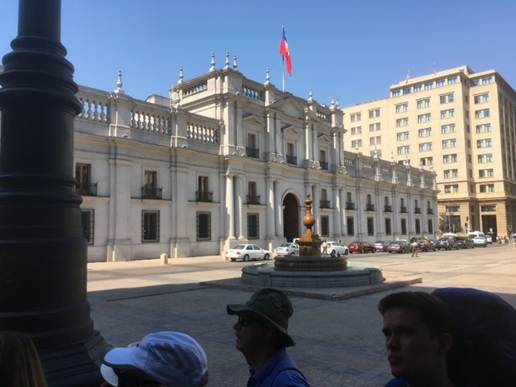
At this particular moment on my tour, we are standing in front of this presidential palace, Palacio La Moneda. I look at the group and they clearly are imagining the armoured vehicles and soldiers and feeling the sense of drama.

“Allende gave one last TV address from his office and was either killed when the airforce bombed the building or committed suicide. “Placed in an historic transition,” he said, “I will pay for loyalty to the people with my life.” He was 63! Another pivotal ’11th of September’ as the coup d’ état ushered in a military dictatorship under General Pinochet.“

“Pinochet’s rule ran for almost twenty years. According to Thor Halvorssen, President of the Human Rights Foundation,:

“He shut down parliament, suffocated political life, banned trade unions, and made Chile his sultanate. His government disappeared 3,200 opponents, arrested 30,000 (torturing thousands of them) … Pinochet’s name will forever be linked to the Desaparecidos, the Caravan of Death, and the institutionalised torture that took place in the Villa Grimaldi complex.”    

In addition, he changed the Constitution in 1980 so that he could remain influential if he stepped down. And step down he did, after enormous pressure from the international community, in 1990. The new Constitution allowed him to take up his old position of Commander-in-chief of the Army and he later become a state senator, eventually dying aged 92. (See note)”

“Why is there an Avenue de Bernado O’Higgins?” asks a tall gaunt chap with an umbrella to shield him from the sun.  “Well, it’s named after a very successful ruler in the early decades of Chile.” “Not Irish then?” “No! Spanish.”

I get quite animated telling the story of coffee in Chile. “It may surprise you to know that coffee was not drunk in Chile until the 1970s when instant coffee first appeared. Then an enterprising woman opened a coffee shop but it was short lived because the coffee was not sweet enough. A different coffee shop developed, one run by woman and staffed by women, where you could have a coffee – but the attraction was not really the coffee, it was the fact that it was served by scantily clad girls, who would come and chat to you while you drank your coffee. These establishments have darkened windows so outsiders could not see what was going on inside.” We were walking through a shopping arcade at the time and I point out just such a coffee shop; some of the group sneak a peep when the door opened, sure enough ……! I assume they think sexism is rife throughout Chilean culture today, but then I tell them that Starbucks has recently opened outlets in the capital which is challenging this somewhat outdated enterprise.

I take them out into Parque Forestal, firstly to the German fountain and then the French one, both given to mark the centenary of the nation in 1910. Many statesmen came to Santiago but sadly the president, Pedro Montt, died on 16 August, four days before the celebrations …… so they went to his funeral ….. and that of his Vice President Fernandez Albano who died four days later! Subsequent gatherings were somewhat muted! (Ed Compare this with what happened in England. Queen Victoria died in 1901. The coronation of Edward VII was due to take place in London on 26 June 1901and the kings and queens, emperors and empresses, presidents and prime ministers from around the world converged on the capital city. Edward suddenly had to have an emergency appendix operation on 24th June and the whole thing was postponed for a month. Imagine the chaos!)

The Canadian couple from a cruise ship docked at Valparaiso (ed. some 120 kms away on the coast) ask how often I do the tour. “Every day apart from Sunday.”

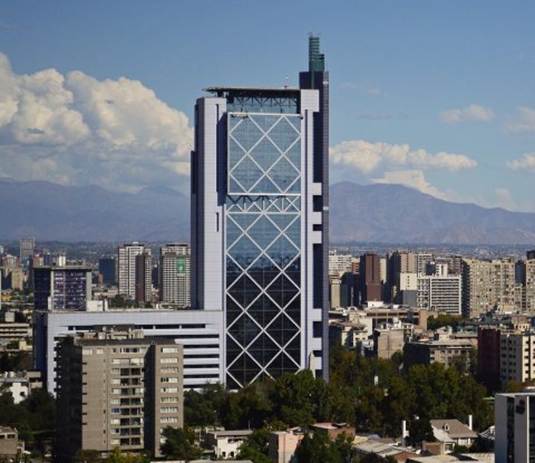
Just to the east of Parque Forestal there’s a rather strange looking office building, the home of Movistar, a communications company. It dates from 1993, and was designed to look like a …. mobile telephone …….. and clearly is now very dated!!

We pass numerous street dogs and there is obvious concern; more for these unfortunate animals than for the street-living humans, of which there are many. Proudly I tell them that a neighbourhood would adopt the local dogs, raise money for vet’s bills, and build a shelter in the nearest park so they had somewhere to sleep when it was cold or wet. Lovely idea huh!

“What’s the mainstay of the Chilean economy?” asks the Englishman.  “Copper” I say, “it’s mined out in the northern deserts.”

During the wander through the crowded streets I’ve pointed out the street stalls selling watermelon drinks, the stalls selling sweet pancakes …. and at about 1230 we stop by a restaurant in Barrio Lastarria for a 30 minute break (Well, I know the owner and he gives me a percentage; helps my bank balance!). I tell them we Chileans love sweet stuff. Ordinary beer is too bitter so we add Fanta! A real favourite dish is beef, French fries, fried eggs, fried onions, topped with corn purée with sugar on top and then placed under the grill. You have heard of Piscosour; here we take Peruvian Pisco, lemon sugar and ice and then, as that’s too sour, add Coca Cola.

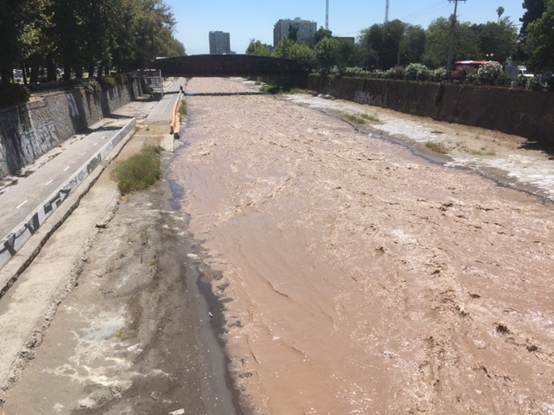
Santiago does have a river, the Mapocho, but it is very fast flowing and muddy ……. a little like an open sewer and not attractive at all.

We cross over it on our way to Barrio Bellavista. (Ed. Most capital cities of the world stand on a major river or on the coast of their countries. I say most, as I can immediately think of Canberra and Brazilia which don’t but they were artificially created, if I can use that expression)

Four hot and dusty hours later, we finish the tour at the home of the mistress of famous Chilean poet Pablo Neruda. (Ed. Famous to those who love poetry, I guess) La Chascona ( meaning a woman with unruly red hair) was actually Matilde Umutia ….. but then you probably knew that as well? I thank them for their attention; well thank those who have lasted to the end, stress the ‘donations keep this business going’ aspect of the ‘Free Tour’ and hope I’ll see them again. Another group tomorrow!

Franco/Richard February 2017

Ed. Note: Those of my readers who live in the UK may remember when Pinochet was in London for some medical procedure in 1998 …… and was arrested on the orders of a Spanish judge on charges under international Human Rights laws ……. He was placed under ‘house arrest’ until the then Home Secretary, a chap called Jack Straw, under huge pressure to either release him or send him to Spain, after 16 months ordered him free to return to Chile on compassionate grounds. In 2004, four years after his return to Chile, he was arrested to stand trial for some 300 criminal charges; he died two years later.